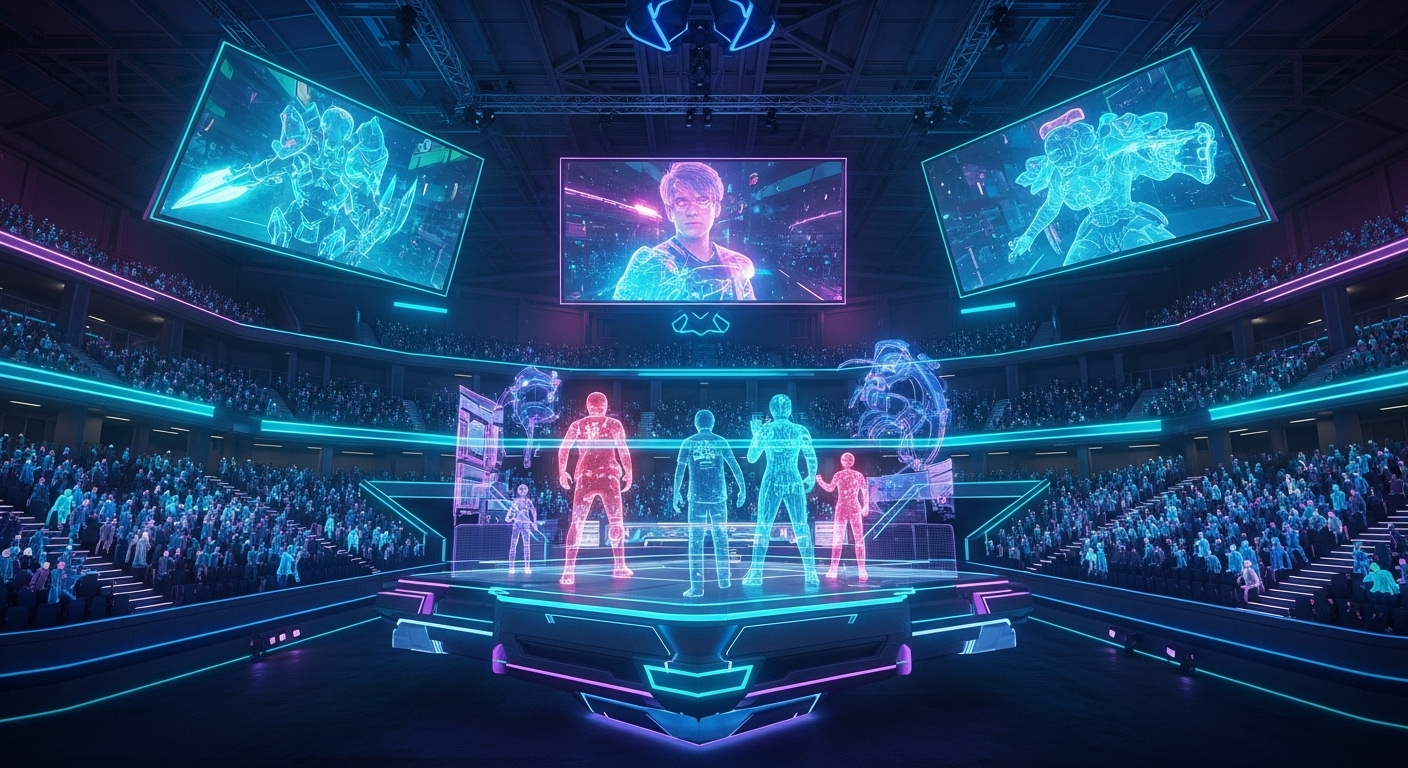
Esports is no longer a small corner of the gaming world. It has evolved into a massive global phenomenon that blends competition, entertainment, culture, and technology. Around the world, arenas are filling, virtual stadiums are growing, and millions tune in to watch professional players compete with lightning-fast reactions and strategic brilliance. Today, esports is standing shoulder-to-shoulder with traditional sports, proving that the digital arena is just as thrilling as any football pitch or basketball court.
Understanding What Esports Truly Means
Esports refers to organized competitive video gaming. It can take place online or in physical venues, and involves both individuals and teams battling to win on digital battlegrounds. The idea is the same as any sport: play at the highest level, entertain fans, and pursue championships. The only difference is that instead of balls, rackets, or racing tracks, players compete using controllers, keyboards, and mice.
The diversity within esports games is fascinating. From shooters to strategy, from racing to sports simulation, there is a competitive category for nearly every gaming taste. Titles like League of Legends, Dota 2, Counter-Strike, Valorant, Fortnite, Call of Duty, and FIFA have built enormous communities that not only enjoy playing the games but passionately support professional teams and players.
From Basement Battles to Global Stages
In the early days, competitive gaming was informal and small-scale. Friends or local communities would gather in living rooms, gaming cafes, or arcades to challenge each other for fun. Nobody expected that tiny seeds of competition would grow into a billion-dollar entertainment industry. But technology changed everything. Faster internet, stronger computers, and online platforms allowed gamers to challenge players from around the world. Suddenly, the world of esports expanded at a pace no one could have predicted.
Today, esports events fill stadiums with roaring fans. Major tournaments feature dramatic light shows, massive screens, live commentators, and prize pools that rival many famous sports tournaments. Cities like Seoul, Shanghai, Los Angeles, Dubai, and Stockholm have become esports capitals, hosting world championships that are celebrated like festivals.
Why Esports Captured the World
Speed. Strategy. Skill. Spectacle. That is the magic formula behind esports. The genre has something for every type of viewer. Some fans enjoy watching teamwork unfold like a well-rehearsed dance. Others love the chaos and excitement of unpredictable moments when a single play changes the fate of an entire match. Many admire the exceptional mechanical skill and precision of pro players.
Esports also thrives because it connects perfectly with modern digital culture. People enjoy engaging socially through games, following players on streaming platforms, and discussing victories and defeats on social media. Unlike traditional sports where physical location limits fan access, esports lives online. Anyone, anywhere, can watch and support their favorite team instantly.
The Role of Professional Teams and Organizations
Esports organizations operate like traditional sports franchises. They train and sign talented players, hire coaches, analysts, and managers, and compete in leagues and tournaments around the world. Some teams have become household names in gaming culture, with huge fan followings and dedicated merchandise lines.
These organizations also take player development seriously. Pro gamers train for hours daily. They study gameplay, analyze opponents, and maintain fitness routines to improve reaction times and mental stamina. The commitment required is extraordinary. It is not just fun and games at the top level. It is a career that demands discipline, sacrifice, and constant improvement.
Big Money, Bigger Dreams
Prize pools in esports have grown explosively. Games such as Dota 2 have distributed prizes worth tens of millions in a single tournament. Sponsorship deals, team branding, streaming revenue, merchandise, advertisements, and media rights have opened the door to huge business opportunities.
Players who reach the top can earn six or seven figures annually. It is astonishing to think that a teenager playing from a gaming chair at home could someday step onto a global stage and win a life-changing amount of money simply by mastering a game.
But behind that glamorous dream lies fierce competition. Only the best of the best break through. Thousands of players are trying to climb to professional ranks, practicing day and night to secure a spot in competitive leagues. Success is thrilling, but the journey can be tough and unpredictable.
The Streaming Revolution
Streaming changed the way fans interact with esports and gaming culture. Platforms dedicated to video game livestreaming allow anyone to broadcast gameplay in real time. This created a new type of celebrity: the gaming entertainer.
Professional players share insights, interact with fans, and even practice while millions watch them live. Streamers create communities built on humor, skill, and personality. Some become more famous than traditional celebrities. The connection between esports and streaming is powerful because fans feel closer to the action, closer to the players, and closer to the culture than they ever could with sports of the past.
Esports and Education
It might surprise many people that esports has entered the world of education. Colleges and universities now offer esports scholarships, dedicated training facilities, and academic programs focused on the gaming industry. Students can pursue careers in game design, sports management, marketing, broadcasting, and more, all through the gateway of esports competition.
Several schools also embrace esports as a tool for building teamwork, leadership skills, and focus among students. Just like joining a basketball team, students join esports teams to grow both socially and professionally.
Esports as a Career Beyond Playing
Not everyone needs to become a pro player to be part of the esports ecosystem. The industry is rich with different career paths including:
Tournament organizers
Game developers
Analysts
Commentators or casters
Team coaches
Journalists
Broadcast producers
Event planners
Marketing specialists
Esports psychologists
Each of these roles contributes to the engine that keeps esports roaring forward. As the industry continues to expand, more creative and technical job opportunities will emerge.
Diversity in Gaming Communities
Esports belongs to everyone. Gamers come from every country, culture, and background. The community is multilingual, multinational, and deeply connected. Women are also making significant strides in esports. There are professional all-women teams, female tournament champions, and women who are shaping the industry through leadership, coaching, content creation, and broadcasting.
Inclusivity remains a work in progress, but the direction is clear. The more diverse esports becomes, the brighter its future will be.
Technology: The Power Behind the Pixels
Esports wouldn’t exist without advanced technology. Ultra-fast internet speeds enable players to compete across continents. Gaming computers and consoles push performance to new limits. VR and AR are emerging as future avenues for esports competitions, promising experiences that merge physical and virtual environments.
Artificial intelligence is also becoming important in training players, analyzing gameplay, developing strategies, and even creating smarter game opponents. As technology evolves, esports evolves with it, constantly upgrading its stage to deliver new experiences for fans.
Esports Challenges and Concerns
No fast-growing industry escapes challenges. Esports faces a few major ones:
Player health
Young pros often experience burnout from long hours of training. Maintaining physical and mental well-being is crucial.
Fair play
Cheating, hacking, and match-fixing are issues that require strict rules and enforcement.
Sustainability
Rapid expansion means organizations must balance excitement with smart business decisions.
Long-term careers
Professional gaming careers are often short, so players must prepare for life beyond competition.
These issues are taken seriously within the industry, and solutions are continuously improving. The goal is to build a stable and healthy competitive environment where players thrive.
The Global Fanbase: A Community Like No Other
Esports fans are among the most passionate supporters anywhere in the entertainment world. They cheer loudly, share memes, celebrate unforgettable plays, and unite across borders. Many fans participate in online conversations to analyze games and predict outcomes. Others attend events dressed in cosplay or wave banners of their favorite team.
The loyalty and excitement of esports fans are irreplaceable. They transform tournaments into epic events bursting with energy and emotion.
The Future of Esports: Expanding Beyond Imagination
The future of esports is bright and buzzing with potential. Here are some developments expected to shape the next era:
More countries will invest in esports infrastructure
Virtual and augmented reality may introduce new competitive formats
Mobile esports will expand even more in developing regions
Esports could appear more regularly on television and mainstream media
Crossovers with music, film, and fashion will deepen
More official support from governments and sports federations
Esports is still young and evolving, much like the technology that fuels it. What it becomes in ten years might exceed anything we can imagine today.
Why Esports Deserves Respect
Sometimes people ask why video games should be considered real sports. The answer is simple. Esports demands tremendous skill, discipline, teamwork, and strategy. Professionals train like athletes. Fans celebrate like supporters of any major sport. There are trophies, championships, and rivalries that spark unforgettable stories.
Esports is more than entertainment. It is a cultural movement that connects generations, builds opportunities, and proves that competition can happen anywhere, even in the digital worlds we love.
Conclusion: A New Era of Competition
Esports has come an incredibly long way. From tiny gaming rooms with a handful of curious spectators to global events with millions watching, the rise of esports is a remarkable chapter in modern culture. It combines the thrill of sports, the creativity of gaming, and the connectivity of online communities. It highlights how passion and technology can create something extraordinary.
The digital arena is a home for dreamers, strategists, entertainers, and innovators. As esports continues to evolve, it reminds us of a simple truth. Competition is universal, excitement has no boundaries, and legends can be born with a controller or mouse in hand. The world is watching, cheering, and celebrating the future of play.
Esports is not just the next big thing. It is already here, powerful and unstoppable.