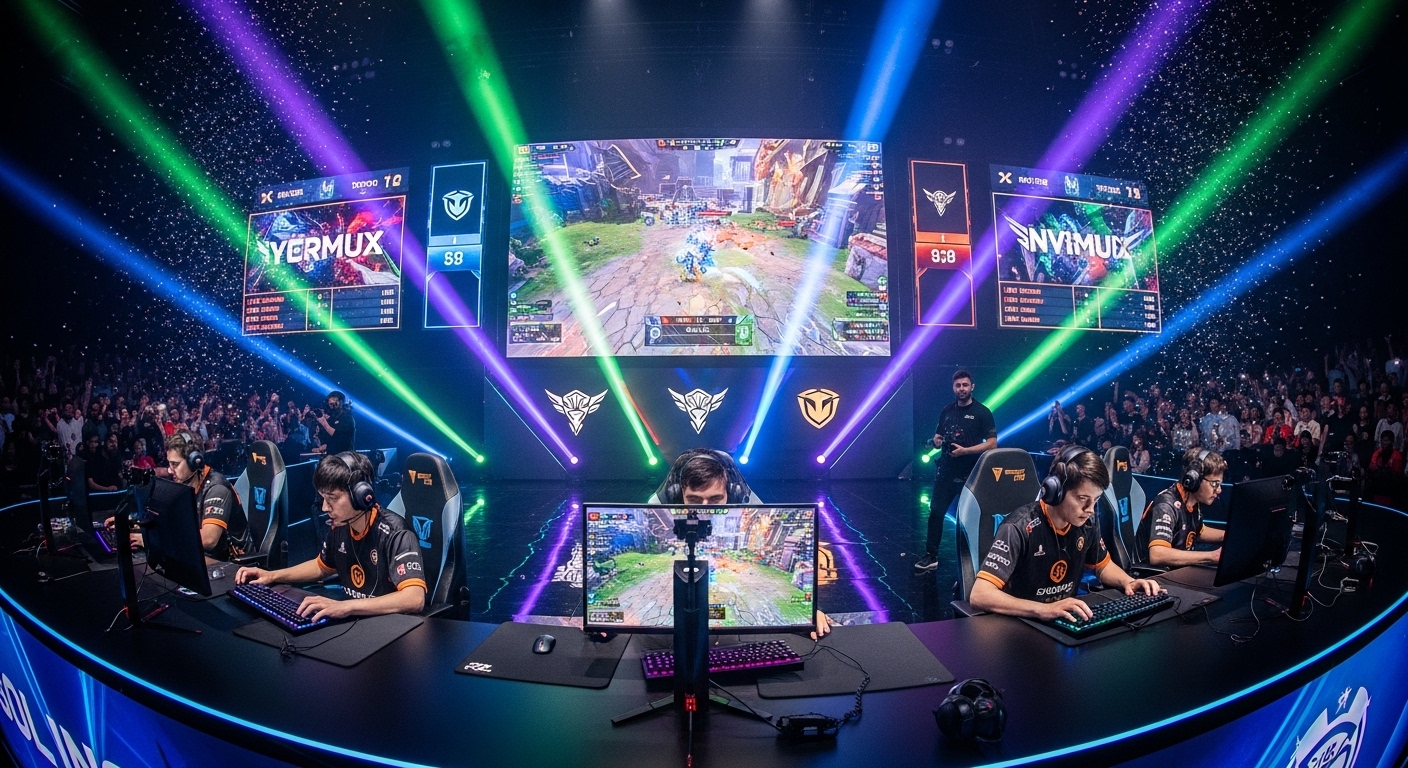
Introduction: The New Age of Competition
Over the past two decades, a silent revolution has unfolded in the world of entertainment and sports. Once considered a niche hobby reserved for a select group of enthusiasts, video gaming has evolved into a multi-billion-dollar global phenomenon known as esports. The term itself, short for electronic sports, represents competitive video gaming at a professional level, where individuals or teams face off in popular games in front of massive live and online audiences. What was once a pastime of youth in dimly lit arcades or home consoles has now become a cultural and economic powerhouse that rivals traditional sports in popularity and influence.
Esports is more than just people playing games. It is a structured, organized, and professionalized ecosystem encompassing players, coaches, sponsors, broadcasters, and millions of fans worldwide. Its rise reflects the merging of technology, entertainment, and community—an evolution that defines the digital era. To understand how esports became a global force, one must trace its roots, explore its present, and look ahead to its boundless potential.
The Origins of Competitive Gaming
The story of esports began long before the internet age. In the early 1970s, video games were still a novelty, but competition was already brewing. The first known video game competition took place in 1972 at Stanford University, where students competed in a game called Spacewar. The prize was modest—a year’s subscription to a magazine—but it set the foundation for organized gaming events.
The 1980s brought the rise of arcade culture, where players flocked to beat high scores in games like Pac-Man and Donkey Kong. These early competitions were individualistic, focused on skill, reflexes, and endurance. Magazines and television shows began recognizing top players, marking the first steps toward the public recognition of gaming talent.
However, the lack of communication technology limited the scale of these competitions. Players had to be in the same physical location to compete, and international tournaments were nearly impossible. The real transformation began with the advent of the internet and networked gaming in the 1990s. Games like Doom and Quake allowed players to battle each other online, breaking geographical barriers and paving the way for the esports industry we know today.
The Growth of Esports in the 2000s
The turn of the millennium marked a defining moment in gaming history. High-speed internet became more accessible, personal computers grew more powerful, and online communities started to form. The competitive gaming scene exploded, with tournaments becoming more organized and prizes more substantial.
One of the earliest professional esports tournaments was the Cyberathlete Professional League (CPL), founded in 1997. It set the blueprint for structured gaming competitions, with sponsored events and professional players. Around the same time, games like StarCraft in South Korea gained immense popularity, turning professional gamers into celebrities. South Korea became the epicenter of esports, with dedicated television channels broadcasting matches and fans filling stadiums to watch their favorite players compete.
The early 2000s also witnessed the birth of multiplayer online battle arenas (MOBAs) and first-person shooters (FPS) that became esports staples. Titles like Counter-Strike, Warcraft III, and later Defense of the Ancients (DotA) dominated the competitive scene. As these games evolved, so did the infrastructure supporting them—sponsors, team organizations, and tournament organizers began investing heavily in the growing market.
Esports and the Streaming Revolution
If the 2000s built the foundation, the 2010s launched esports into the stratosphere. The arrival of live-streaming platforms changed everything. With the creation of streaming services such as Twitch and YouTube Gaming, fans could watch their favorite players and teams compete from anywhere in the world, in real time. No longer did fans need to attend events physically; they could tune in from their homes and engage directly with the gaming community.
This accessibility fueled unprecedented growth. Games like League of Legends, Dota 2, and Counter-Strike: Global Offensive began hosting international tournaments with prize pools reaching millions of dollars. The 2018 Dota 2 International, for instance, had a prize pool exceeding 25 million dollars—a figure once unimaginable in gaming.
Streaming also gave rise to a new kind of celebrity: the gaming influencer. Professional players, streamers, and content creators built massive fanbases by sharing their gameplay, commentary, and personalities online. The line between entertainment and competition blurred, transforming esports into a hybrid form of media that appealed to both gamers and casual viewers alike.
The Economic Impact of Esports
Esports is no longer just a subculture; it is a major player in the global entertainment industry. The economic ecosystem surrounding it has expanded rapidly, encompassing sponsorships, advertising, broadcasting rights, merchandise, and ticket sales. Major corporations and brands have entered the scene, recognizing the marketing potential of engaging with younger, tech-savvy audiences.
Global esports revenues have surged into the billions, and the number of professional players and teams has multiplied. Organizations now operate much like traditional sports franchises, complete with management teams, analysts, and training facilities. Sponsorship deals from companies in technology, energy drinks, apparel, and automotive industries have fueled the financial growth of esports teams and tournaments.
In addition to direct economic benefits, esports has also driven technological innovation. The need for better graphics, faster internet connections, and improved streaming infrastructure has accelerated advancements in hardware and software. Esports has even contributed to the development of new broadcasting technologies, such as virtual reality and real-time analytics.
Esports as a Legitimate Sport
The debate over whether esports qualifies as a “real sport” has been ongoing for years. Critics argue that traditional sports require physical exertion and athleticism, whereas esports relies on mental agility and hand-eye coordination. Supporters counter that esports demands strategic thinking, teamwork, discipline, and reflexes—skills comparable to those in many physical sports.
In many ways, esports mirrors the structure and professionalism of traditional sports. Players train rigorously for hours each day, refining their mechanics and strategies. Teams employ coaches, nutritionists, and psychologists to ensure optimal performance. Competitions are governed by official rules, referees, and standardized regulations. Fans passionately support their favorite teams, wear jerseys, and attend tournaments in large arenas.
The inclusion of esports in major events such as the Asian Games further legitimizes its status as a sport. Discussions continue about potential inclusion in the Olympic Games, signaling growing recognition of esports as a legitimate and influential form of competition.
The Global Esports Community
One of the most remarkable aspects of esports is its global reach. Unlike traditional sports that may be geographically concentrated, esports transcends borders, languages, and cultures. Players from all over the world can compete on equal footing, united by their shared passion for gaming.
Regions such as North America, Europe, China, and South Korea have established themselves as esports powerhouses, each contributing unique styles and strategies. Meanwhile, countries in Southeast Asia, Latin America, and Africa are rapidly developing their own esports scenes, supported by increasing internet access and investment.
The community-driven nature of esports is what sets it apart from most entertainment industries. Fans are not just spectators; they actively participate in discussions, fan art, and community-driven events. Social media and online forums amplify this connection, creating a sense of belonging among millions of people across the world.
This global community has also fostered diversity and inclusivity. While challenges related to gender representation and accessibility remain, initiatives are continually emerging to make esports more inclusive for all. Women’s leagues, youth programs, and educational partnerships are opening new doors for aspiring players and professionals.
The Educational and Career Pathways in Esports
The rise of esports has created new opportunities not only for players but also for those interested in careers behind the scenes. The industry demands professionals in event management, marketing, broadcasting, game design, data analysis, and coaching. Universities around the world now offer esports scholarships, degree programs, and dedicated training facilities, legitimizing gaming as a viable academic and career pursuit.
Esports education focuses on more than just gameplay. It includes business management, media production, health and wellness, and technology. These programs prepare students for diverse roles within the industry, from managing teams to producing tournaments or developing future gaming technologies.
High schools have also started to recognize the benefits of esports. Organized gaming clubs and competitive leagues teach teamwork, problem-solving, communication, and strategic thinking—skills that are valuable in all aspects of life. The growing educational infrastructure around esports ensures that the next generation of talent will be prepared not only to play but also to lead the industry forward.
The Social and Cultural Influence of Esports
Esports has redefined what it means to be a fan, a competitor, and even an athlete in the digital age. Its influence extends beyond gaming, shaping fashion, music, and social media culture. Gaming-inspired apparel has become mainstream, and popular musicians have collaborated with gaming companies to produce music for tournaments and promotional events.
The crossover between esports and traditional entertainment has become increasingly common. Athletes, actors, and musicians invest in esports teams, while game characters and tournaments appear in movies and shows. This blending of industries reflects a broader cultural shift toward digital experiences and interactive entertainment.
Moreover, esports has become a tool for social connection. Online games and tournaments provide platforms for people to connect across continents, fostering friendships and collaborations. During global events such as the COVID-19 pandemic, esports provided a sense of community and continuity when traditional sports and public gatherings were halted.
Challenges Facing the Esports Industry
Despite its remarkable success, esports faces several challenges that must be addressed for sustainable growth. One of the main concerns is the physical and mental health of players. Professional gamers often practice for long hours, leading to issues like burnout, repetitive strain injuries, and mental fatigue. The industry is beginning to prioritize wellness programs and balanced training schedules to ensure the longevity of players’ careers.
Another challenge is regulation. Unlike traditional sports, esports lacks a unified governing body. Each game has its own developers, organizers, and rules, which can lead to inconsistencies in standards, prize distribution, and player rights. Establishing ethical and transparent governance structures will be crucial to maintain integrity and fairness in competition.
Toxic behavior and online harassment also remain issues within the community. Efforts to promote positive gaming environments, diversity, and inclusivity are essential to create a welcoming culture for all participants. Developers, teams, and tournament organizers are increasingly adopting codes of conduct and strict anti-harassment policies.
Monetization is another evolving aspect. While the industry generates immense revenue, the distribution of income can be uneven. Smaller teams and independent players often struggle to secure financial stability. As the industry matures, equitable economic models will need to be developed to support a healthy competitive ecosystem.
The Future of Esports
The future of esports is filled with potential and innovation. As technology continues to advance, the boundaries between virtual and physical experiences will blur even further. The integration of virtual reality (VR), augmented reality (AR), and artificial intelligence (AI) promises to revolutionize how esports are played and experienced.
The growth of mobile gaming has also opened new frontiers. In regions where high-end PCs and consoles are less common, mobile esports titles have surged in popularity. Games like PUBG Mobile, Mobile Legends, and Free Fire have created enormous competitive scenes, especially in Asia and Latin America.
In addition, the rise of blockchain technology and digital collectibles is transforming the ownership and economy of esports. Virtual items, skins, and assets can now hold real-world value, creating new monetization models for both players and fans.
Esports is also expected to become even more integrated with mainstream entertainment. Television networks, streaming platforms, and even movie studios are investing in esports-related content. The line between gaming and media will continue to dissolve, giving rise to new forms of storytelling and audience engagement.
Conclusion: The Enduring Power of Play
Esports is no longer a fleeting trend or a curiosity of modern culture. It represents a profound shift in how humans experience competition, community, and entertainment in the digital era. From humble beginnings in arcades and college dorm rooms to sold-out arenas and international broadcasts, esports has carved its place in history.
Its journey is a testament to human creativity, technological progress, and the universal desire to connect through play. Whether one is a professional gamer, a casual player, or a dedicated fan, esports offers something for everyone—a shared space where passion, skill, and innovation come together.
As the world continues to evolve, so too will esports. It will shape and be shaped by the future of technology, culture, and human connection. The games may change, but the spirit of competition and camaraderie that defines esports will remain. In many ways, esports is not just the future of gaming—it is the future of global sport itself.