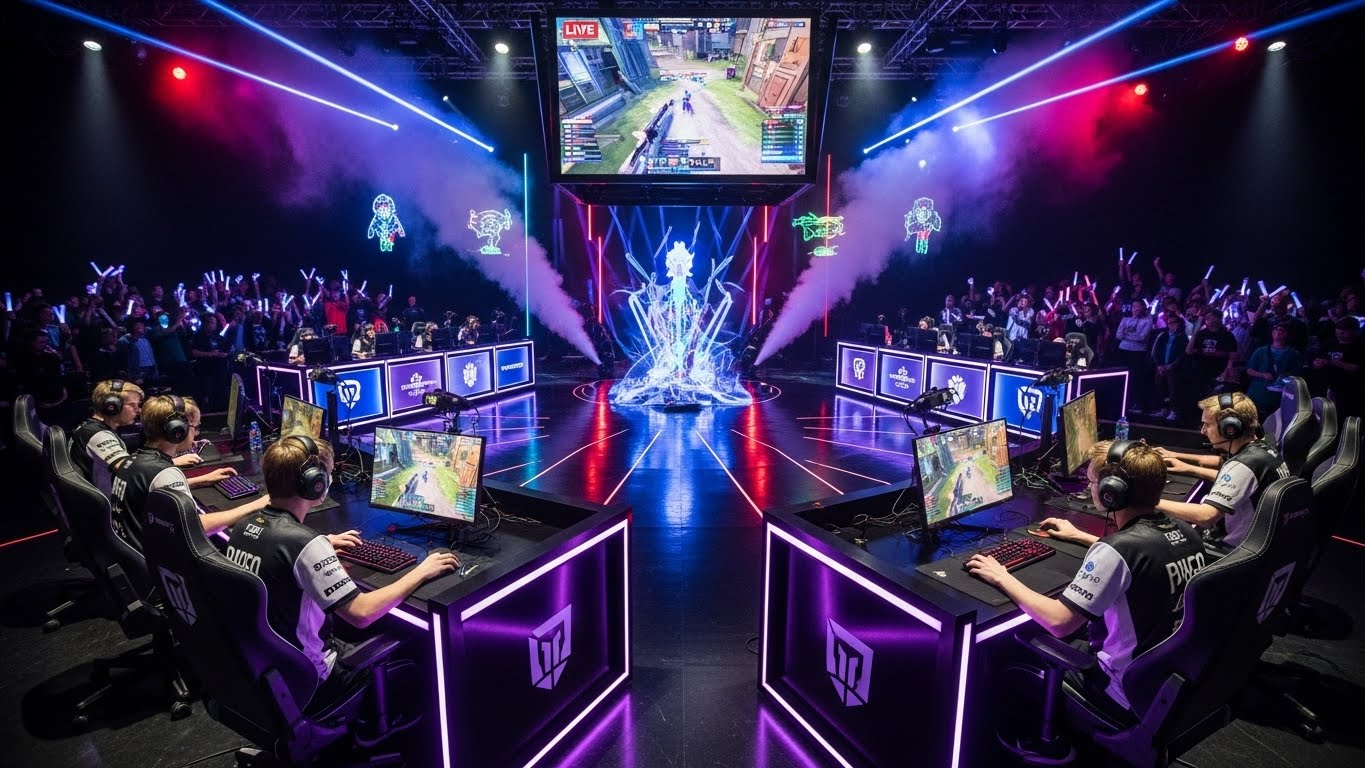
The world of esports has rapidly evolved from a niche interest to a full-fledged global industry. Once seen as a pastime for gamers, competitive video gaming is now a force that spans continents, reaches millions of viewers, and generates billions of dollars in revenue. The rise of esports is not just a trend—it is a revolution in the world of entertainment, sports, and digital media. In this blog post, we will explore the history, growth, and future of esports, examining its impact on culture, technology, and the business world.
The Origins of Esports: How It All Began
Esports may seem like a modern concept, but its roots stretch back to the early days of video gaming. The concept of competitive gaming dates back to the 1970s when the first video game tournaments were held at universities. One of the earliest recorded events was the “Intergalactic Spacewar Olympics” at Stanford University in 1972, where players competed in the arcade game Spacewar!.
The idea of gaming competitions slowly gained traction in the following decades, but it wasn’t until the late 1990s and early 2000s that esports began to take a more formal shape. Games like StarCraft and Warcraft became extremely popular in countries such as South Korea, where competitive gaming started to be taken seriously. The first World Cyber Games in 2000, which brought together the best players from around the world, marked the beginning of esports as an organized and competitive endeavor.
The Surge of Esports: The 2000s to Present
While the early 2000s saw the first large-scale esports tournaments, it wasn’t until the rise of online multiplayer games and streaming platforms that esports truly exploded in popularity. The release of League of Legends in 2009 marked a pivotal moment for esports. Its competitive scene quickly grew, and it soon became the centerpiece of many major tournaments, culminating in the League of Legends World Championship, which began in 2011.
As esports events gained larger audiences, the industry saw significant investment from major corporations, media networks, and tech companies. The early years of the 2010s saw esports becoming more professionalized, with players signing contracts, teams being sponsored by major brands, and tournaments offering significant prize money.
One of the key milestones in esports history came in 2013 with the launch of Twitch, a live streaming platform dedicated to video games. Twitch allowed viewers to watch their favorite players and teams in real-time, which created a more direct connection between fans and the esports community. The platform played a crucial role in the rapid growth of esports, turning gaming into a spectator sport and allowing players to build large fanbases.
The Esports Ecosystem: Key Players and Stakeholders
Today, esports has evolved into a highly structured ecosystem, with multiple players contributing to its growth. These stakeholders range from the professional athletes themselves to the broadcasters and event organizers that bring esports to the world. The esports ecosystem can be broken down into several key components:
Professional Players and Teams
At the heart of esports are the professional players who compete in tournaments for glory and prize money. These players often start young, building up skills through years of practice and participation in online leagues. Teams such as Cloud9, Team Liquid, Fnatic, and G2 Esports are among the most well-known organizations in esports, with players who are not just competitors but also streamers, influencers, and ambassadors for the sport.
Esports teams operate similarly to traditional sports organizations, with coaching staff, analysts, and even nutritionists to help players perform at their best. The level of skill required in esports is immense, with top-tier players often practicing for 10-12 hours a day. The competitive nature of esports makes it an attractive career for talented gamers, with top players earning substantial salaries and endorsement deals.
Tournament Organizers and Event Planners
Esports tournaments have become some of the most watched events on the planet, attracting millions of viewers worldwide. Major esports tournaments like The International (Dota 2), League of Legends World Championship, and Overwatch League have prize pools that can reach tens of millions of dollars. These events are often broadcast live across multiple platforms, including Twitch, YouTube, and traditional television networks.
Event organizers and promoters play a crucial role in bringing these tournaments to life. They handle everything from securing sponsorship deals to coordinating logistics, ensuring that the events run smoothly and attract as much attention as possible. Large esports tournaments often feature stunning stage setups, live commentary, and elaborate opening ceremonies, all designed to enhance the spectacle and make the events as exciting as possible for viewers.
Streaming Platforms and Viewers
Live streaming platforms like Twitch, YouTube Gaming, and Facebook Gaming are integral to the success of esports. These platforms give fans the ability to watch esports events in real-time, interact with streamers and fellow viewers, and even participate in live chats and betting activities. The popularity of live streaming has turned esports into a massive global entertainment industry, with millions of viewers tuning in to watch events like The International or League of Legends World Championship.
For many esports fans, these platforms provide more than just an opportunity to watch games—they also offer a sense of community. Many fans actively participate in the esports scene by following their favorite players, joining fan clubs, and sharing content. This level of interactivity helps to build a loyal and engaged fan base, further fueling the growth of the esports ecosystem.
The Business of Esports: Sponsorship, Revenue, and Investments
Esports is no longer just a hobby; it is a multi-billion-dollar industry. The growth of esports has attracted significant investment from both tech companies and traditional sports organizations. Large corporations such as Coca-Cola, Intel, Red Bull, and Nike have invested heavily in the esports market, sponsoring tournaments, players, and teams. Sponsorship deals provide a vital revenue stream for many esports organizations, allowing them to operate and expand their reach.
In addition to sponsorships, esports generates revenue from ticket sales, merchandise, media rights, and advertising. Streaming platforms like Twitch also offer monetization opportunities for content creators, enabling them to earn money through subscriptions, donations, and advertising. Some esports leagues, such as the Overwatch League and the Call of Duty League, operate on a franchise-based model, similar to professional sports leagues like the NFL or NBA. These leagues sell franchise slots to investors, creating a more sustainable business model for the industry.
Revenue Models in Esports
One of the key revenue drivers in esports is the prize money for competitive tournaments. As prize pools grow larger, players and teams have the opportunity to earn substantial amounts of money. However, prize money is not the only way players can generate income. Many top-tier players also earn money through sponsorships, streaming, and content creation. This creates multiple revenue streams for players and teams, helping to elevate esports to the level of traditional professional sports.
Another significant revenue source is media rights. Companies like Twitch, YouTube, and even traditional sports broadcasters have been purchasing the rights to broadcast major esports events. As esports continues to grow, it is likely that these media deals will become even more lucrative, further driving the commercialization of the industry.
The Cultural Impact of Esports
The rise of esports has had a profound impact on popular culture, especially among younger generations. Gaming has moved from being a solitary activity to a global social phenomenon, with fans connecting across borders to cheer on their favorite teams and players. Esports has also helped to legitimize gaming as a sport in its own right, breaking down the stigma that once surrounded video games.
Esports has created a new form of entertainment, blending the excitement of traditional sports with the innovation of the digital age. Fans now gather in massive arenas to watch live esports events, much like they would for a traditional sports game. The energy, excitement, and atmosphere of these events rival that of major sports competitions like the Super Bowl or the World Cup.
Moreover, esports has provided a platform for a new generation of athletes. Professional gamers are now seen as role models, inspiring young people to pursue careers in gaming. The sense of community within esports is also a major factor in its cultural appeal. Many fans feel a deep connection to the teams and players they follow, creating an inclusive environment where people of all backgrounds can come together to celebrate their shared passion.
The Future of Esports: Where Do We Go From Here?
The future of esports looks incredibly promising. As the industry continues to grow, we can expect even more innovation in the form of new games, advanced technology, and immersive experiences. Virtual reality (VR) and augmented reality (AR) are already beginning to play a role in the development of new esports experiences, and in the coming years, we may see entirely new forms of gaming and competition.
One of the most exciting prospects for esports is its potential inclusion in traditional sporting events. The International Olympic Committee has already expressed interest in including esports in the Olympic Games, and many countries are working to establish esports as a recognized sport. If esports is added to the Olympics, it would further cement its place in mainstream entertainment.
Furthermore, as gaming technology continues to advance, esports will only become more accessible. Cloud gaming, for example, has the potential to revolutionize how players compete, making it easier for individuals to participate in high-level competitions without needing expensive hardware.
Conclusion: A New Era of Competitive Entertainment
Esports is more than just a game—it’s a global industry that has transformed the way we think about sports, entertainment, and culture. From its humble beginnings in university dorms to becoming a multi-billion-dollar industry, esports has come a long way. With its growing fanbase, increasing revenue, and expanding influence, esports is poised to continue its rise as one of the most exciting and innovative entertainment industries in the world. Whether you’re a casual viewer or an aspiring professional, esports offers endless