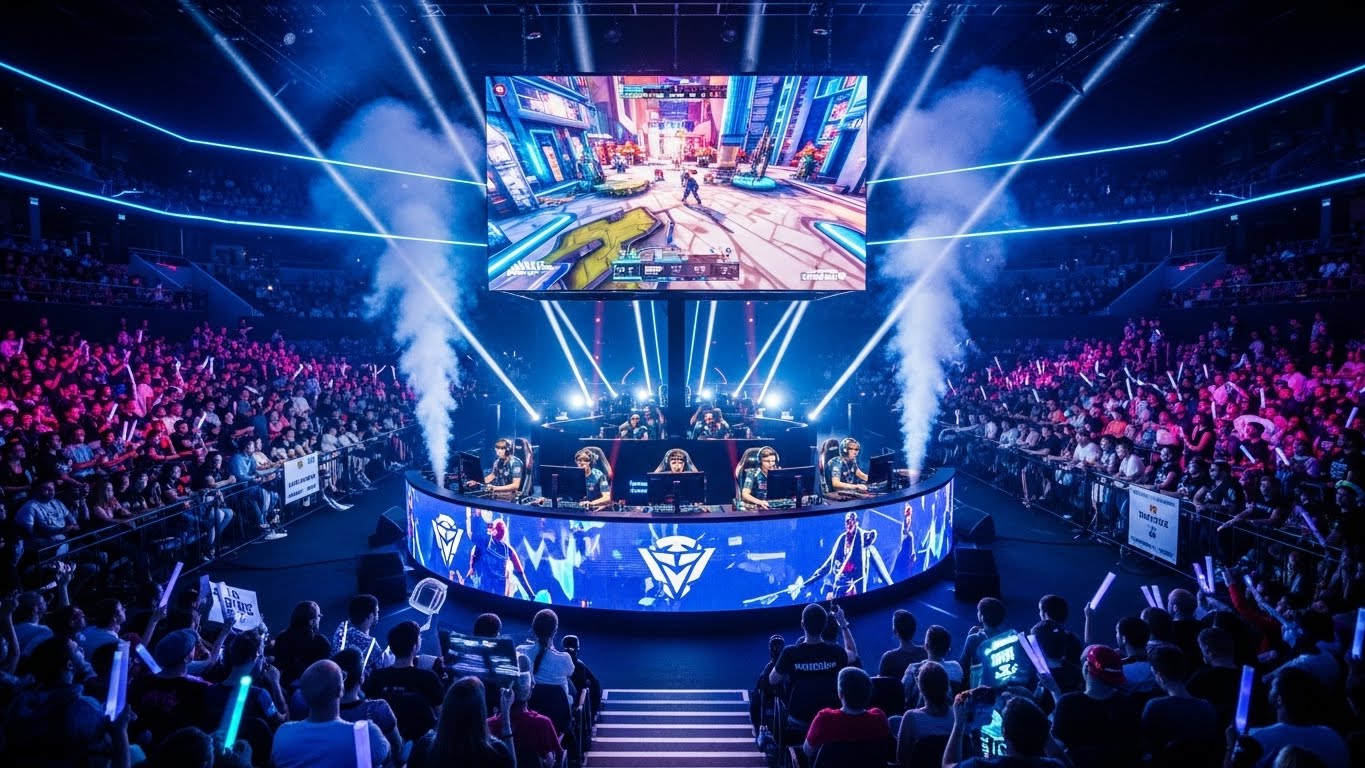
In recent years, esports has grown from a niche pastime into one of the fastest-growing industries in the world. What started as a small community of passionate gamers has evolved into a billion-dollar ecosystem, attracting millions of fans, top-tier sponsorships, and even traditional sports organizations. The rise of esports is not just about playing video games; it is a cultural shift, one that is changing how we perceive competition, entertainment, and the future of sports.
This blog post takes an in-depth look at the world of esports, exploring its origins, how it became a global force, and the factors that continue to drive its explosive growth. We will also discuss the key games at the heart of the esports revolution, the industry’s future, and its impact on the traditional sports landscape.
What Is Esports?
At its simplest, esports refers to competitive video gaming. However, the term encompasses much more than just playing games. Esports involves organized multiplayer video game competitions, often between professional players, teams, or organizations. The competitions can take place in a variety of game genres, including first-person shooters, real-time strategy games, multiplayer online battle arenas (MOBAs), and battle royale games.
While esports has been around for decades, its current form is a far cry from its humble beginnings. Today, esports features large-scale tournaments that attract millions of viewers globally, with prize pools reaching into the millions of dollars. The world of esports is no longer confined to basements and living rooms; it’s a global entertainment phenomenon, with competitions held in massive arenas and streamed online for audiences across the globe.
The Evolution of Esports: A Brief History
Esports can trace its roots back to the early days of video gaming. The first real taste of organized gaming competitions came in the 1970s and 1980s, but it wasn’t until the 1990s that the foundations of modern esports were laid. Games like Doom, Quake, and StarCraft were among the first to be played in competitive settings. These early tournaments were modest affairs, but they showed the potential for multiplayer gaming to become something much larger.
The real turning point came in the early 2000s with the rise of StarCraft, a real-time strategy game developed by Blizzard Entertainment. In South Korea, StarCraft became a national obsession, with professional leagues and dedicated TV broadcasts of tournaments. This early success laid the groundwork for what would become a global phenomenon, as players began to earn sponsorships, and esports events started to draw large audiences.
The 2010s marked the real explosion of esports. Streaming platforms like Twitch made it easier for players to broadcast their games and for fans to watch, interact, and follow their favorite teams. At the same time, major games like League of Legends, Dota 2, and Counter-Strike: Global Offensive began to dominate the esports scene, creating a new generation of superstars. Esports tournaments began to rival traditional sports events in terms of prize money, viewership, and prestige.
The Factors Behind the Rapid Growth of Esports
Esports’ rapid growth can be attributed to several key factors. These factors have transformed the competitive gaming scene from a niche hobby into a mainstream entertainment industry.
1. Advancements in Technology and Internet Infrastructure
The growth of esports has been largely driven by advancements in technology, particularly in internet connectivity. Faster internet speeds and improved gaming infrastructure have enabled competitive gamers to play against each other in real-time, regardless of location. This technological leap has made it possible for players from across the globe to compete in tournaments, increasing the scale and accessibility of competitive gaming.
Moreover, the rise of powerful gaming PCs and consoles has helped create a better, more immersive gaming experience. Players now have access to high-definition graphics, faster response times, and more sophisticated in-game mechanics, all of which contribute to the intensity and excitement of esports competitions.
2. Streaming Platforms: A New Era of Fan Engagement
Another major factor in the rise of esports has been the explosion of streaming platforms such as Twitch, YouTube Gaming, and Facebook Gaming. These platforms allow players to broadcast their gameplay live, creating a direct connection between them and their fans. With millions of viewers tuning in to watch top-tier gamers and esports tournaments, these platforms have become the backbone of the esports ecosystem.
Streaming has democratized the way people consume esports content. Fans can watch their favorite players in real time, interact through live chat, and even support them financially through donations and subscriptions. Esports tournaments, once confined to physical arenas, are now broadcast live to millions of viewers around the world, all from the comfort of their own homes.
3. Investment from Traditional Sports and Major Brands
As esports has grown in popularity, it has attracted significant investment from traditional sports teams and major global brands. Professional sports organizations, including NBA and NFL teams, have established esports franchises, with teams competing in various gaming leagues. Brands such as Coca-Cola, Intel, Red Bull, and Mercedes-Benz have also invested heavily in esports, sponsoring events and teams.
This influx of investment has had a major impact on the esports ecosystem. It has allowed teams to expand, improve their facilities, and offer higher salaries and better opportunities for professional players. It has also helped boost the legitimacy of esports, with mainstream brands recognizing it as a valuable platform for marketing and fan engagement.
4. A New Generation of Fans and Gamers
Esports has found a particularly enthusiastic audience among younger generations, many of whom have grown up with gaming as a central part of their lives. This demographic is not only interested in playing games but also in watching others compete at the highest level. Esports offers an exciting and accessible form of entertainment that is tailored to the interests and preferences of young, tech-savvy fans.
Social media platforms like Twitter, Instagram, and Discord have also played a role in creating strong fan communities around esports. These platforms enable fans to interact with players and teams, participate in discussions, and stay updated on the latest news and tournaments.
The Key Esports Games
Esports encompasses a wide variety of games, each with its own unique appeal and fanbase. Some of the most popular games in the esports scene today include:
1. League of Legends (LoL)
League of Legends, developed by Riot Games, is one of the most successful and widely recognized esports titles. The game’s combination of strategy, team coordination, and fast-paced gameplay has made it a favorite among competitive gamers. The League of Legends World Championship is one of the biggest esports events in the world, attracting millions of viewers and offering multi-million-dollar prize pools.
2. Dota 2
Developed by Valve, Dota 2 is another major title in the esports world. Known for its complex gameplay and strategic depth, Dota 2 has a dedicated fanbase and hosts one of the most lucrative esports tournaments: The International. The prize pools for The International have consistently surpassed $30 million, funded in part by community contributions.
3. Counter-Strike: Global Offensive (CS: GO)
Counter-Strike: Global Offensive, or CS: GO, is a tactical first-person shooter that has been a staple in the esports community for years. The game’s emphasis on teamwork, strategy, and precision shooting has made it one of the most popular and enduring titles in competitive gaming. CS: GO has a thriving esports scene, with major tournaments such as ESL Pro League and DreamHack Masters offering large prize pools.
4. Fortnite
Fortnite, developed by Epic Games, revolutionized the battle royale genre and became a massive success in the esports world. The game’s unique blend of shooting, building, and survival mechanics has attracted millions of players worldwide. Epic Games has invested heavily in esports, hosting tournaments like the Fortnite World Cup with prize pools that rival those of traditional sports events.
5. Overwatch
Overwatch, developed by Blizzard Entertainment, is a team-based first-person shooter that has become a significant player in the esports industry. The Overwatch League, launched in 2018, brought a level of professionalism and structure to the esports scene, with teams representing cities around the world. The game’s colorful cast of characters and strategic gameplay have made it a hit among esports fans.
The Future of Esports
As esports continues to evolve, there are several trends that could shape its future:
1. Continued Growth of Esports as a Career Path
The growing popularity of esports has opened up new career opportunities. In addition to professional players, there is an increasing demand for coaches, analysts, broadcasters, event organizers, and content creators. Esports is becoming a legitimate career choice, with players and industry professionals able to earn a living from their passion for gaming.
2. Integration of Virtual and Augmented Reality
The future of esports may also include the integration of virtual reality (VR) and augmented reality (AR). These technologies have the potential to revolutionize how players experience games, making competitions more immersive and engaging for both participants and viewers. VR and AR could lead to entirely new types of esports that blur the lines between the virtual and physical worlds.
3. Esports in Education
Esports is also making its way into educational institutions. Many colleges and universities now offer scholarships for esports players, and high schools are starting to introduce esports programs. This trend is helping to foster the next generation of esports professionals while also providing students with valuable skills in areas like teamwork, strategy, and digital media.
4. Global Expansion
Esports is no longer confined to North America and Europe. Asia, particularly China and South Korea, has been at the forefront of the esports revolution, but countries across the globe are beginning to invest in esports infrastructure.