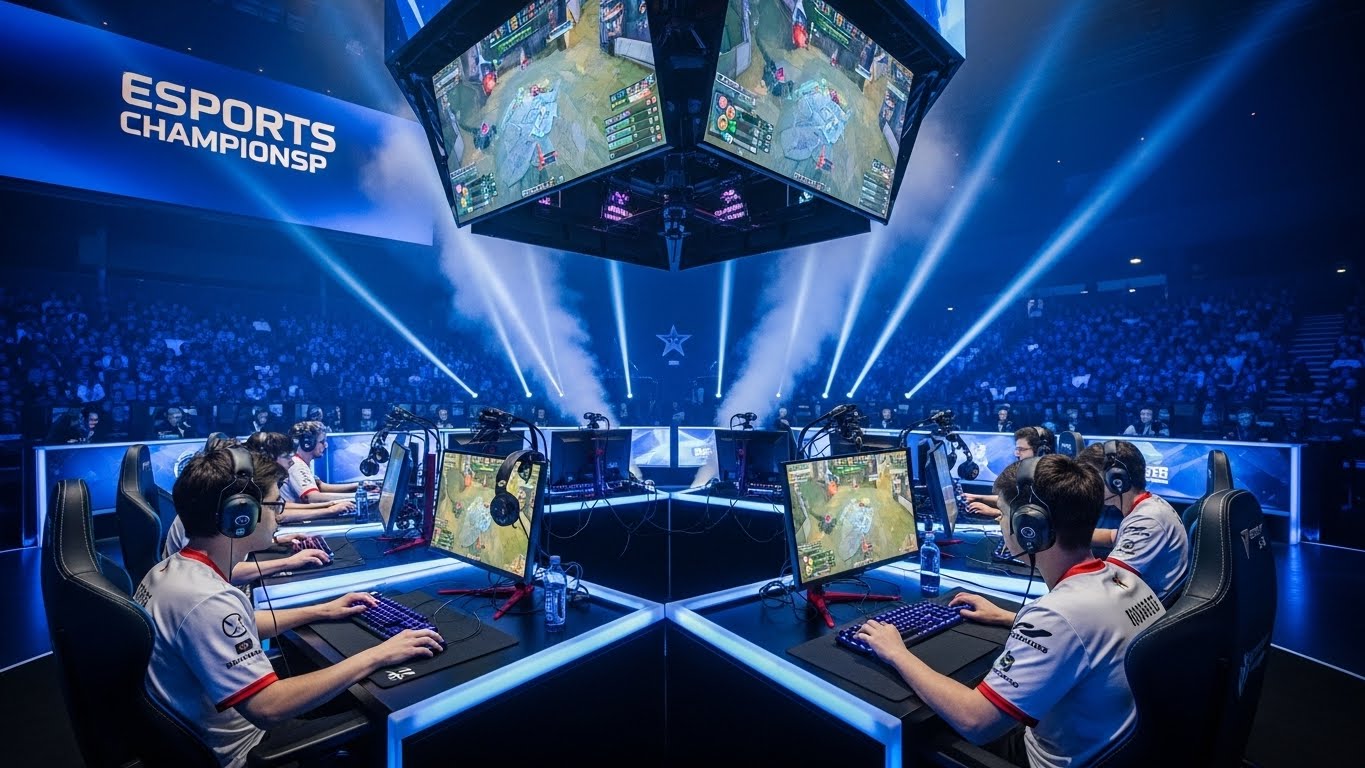
In the last decade, eSports has grown from a niche hobby into one of the world’s largest and most exciting entertainment industries. Competitive gaming has become a global phenomenon, with millions of fans tuning in to watch their favorite players and teams battle it out in highly competitive tournaments. The rise of eSports is not just about the games themselves but also about the culture, business opportunities, and the sense of community it has created. In this post, we explore how eSports has evolved, the impact it has had on the gaming world and beyond, and why it is likely to continue growing in the years to come.
The Birth and Evolution of eSports
The history of eSports dates back to the early days of competitive gaming. The first notable tournaments began in the 1990s when games like “Street Fighter” and “Doom” became popular in the gaming community. These early competitions were typically small, local affairs. It wasn’t until the late 1990s and early 2000s that the competitive gaming scene started to take shape with the advent of online multiplayer games and organized events. Games like “Quake,” “StarCraft,” and “WarCraft” were pivotal in the establishment of eSports. These games allowed players to compete against each other online, and tournaments began offering cash prizes, attracting a dedicated following.
The real turning point came in the mid-2000s with the launch of streaming platforms like Twitch. Twitch, in particular, allowed gamers to broadcast their matches to a global audience, vastly expanding the reach of eSports. The ability to watch professional players in real-time, discuss strategies with others, and follow tournaments from anywhere in the world was a game-changer. This shift toward streaming turned eSports into a spectator sport, and the increasing number of viewers brought in sponsorships from major companies. What was once a niche activity soon became a full-fledged global industry.
Today, eSports includes a wide variety of genres, from first-person shooters (FPS) like “Counter-Strike: Global Offensive” to multiplayer online battle arenas (MOBAs) like “League of Legends” and “Dota 2.” These games have become staples in the eSports ecosystem, with professional leagues, tournaments, and global championships drawing huge crowds and even larger online audiences.
The Growth of eSports: A Multi-Billion Dollar Industry
The financial growth of eSports over the past decade has been nothing short of remarkable. In 2020, the global eSports industry generated over $1 billion in revenue, and projections show this figure will continue to rise in the coming years. This growth is fueled by multiple factors, including media rights, sponsorships, merchandise sales, and ticket sales for live events. Major corporations like Intel, Coca-Cola, and Nike have all jumped on board, sponsoring teams and tournaments to get in front of the massive, engaged eSports audience.
One of the most significant contributors to the financial growth of eSports is media rights. Tournaments like “The International,” the world championship for the game “Dota 2,” attract millions of viewers and have been broadcast on platforms such as ESPN and YouTube. The rise of eSports as a legitimate form of entertainment has led to significant investments from traditional media companies, which see the potential for massive returns by broadcasting these events to a wide audience.
In addition to traditional sponsorships, eSports has also attracted investment from venture capitalists and sports organizations. Major professional sports teams, including basketball and football clubs, have started their own eSports teams or partnered with existing organizations. These investments are further legitimizing eSports as a professional sport, akin to traditional sports leagues like the NBA or NFL.
Professional eSports: A Career Path Like No Other
One of the most exciting aspects of eSports is the opportunity it provides for players to turn their passion for gaming into a full-time career. Professional eSports players can make significant money through tournament prize pools, sponsorships, streaming, and merchandise sales. Top players in popular games like “League of Legends” and “Fortnite” can earn millions of dollars per year, which has made competitive gaming an attractive career path for many young gamers.
Becoming a professional gamer is not easy, however. It requires incredible skill, dedication, and a deep understanding of the games they play. Professional players typically train for hours every day, honing their skills and learning new strategies. The level of competition in eSports is fierce, with players constantly striving to improve their gameplay in order to stay ahead of the competition. Many professional eSports players start at a young age, sometimes even as teenagers, and some retire by their late twenties due to the intense mental and physical demands of the profession.
Aside from playing, many players also engage in content creation by streaming their gameplay on platforms like Twitch or YouTube. This allows players to earn revenue from ads, donations, and subscriptions, as well as build their personal brand. Content creation has become an important part of the eSports ecosystem, with many pro gamers gaining large followings through their streams and videos.
eSports Tournaments: The Heartbeat of the Industry
At the core of eSports lies its tournaments and competitions. These events, which can take place online or in massive arenas, are where players and teams compete for glory and cash prizes. Some of the most famous eSports tournaments include “The International” (Dota 2), “League of Legends World Championship,” and “CS:GO Major Championships.” These tournaments attract millions of viewers from around the world and have prize pools that often reach several million dollars.
The structure of eSports tournaments varies depending on the game and the organizing body, but they generally follow a competitive format that includes qualification rounds, group stages, and knockout rounds. These tournaments are broadcast live, with professional commentators providing analysis and color commentary to enhance the viewing experience. The level of production that goes into these events is comparable to traditional sports broadcasts, with high-quality graphics, multiple camera angles, and in-depth analysis.
What sets eSports tournaments apart from traditional sports events is their accessibility. Fans can watch tournaments live online for free, and they can engage in real-time via live chats or social media. This level of accessibility has played a major role in eSports’ rapid rise in popularity, particularly among younger audiences.
The Community Aspect of eSports
One of the unique aspects of eSports is its community. eSports has fostered a vibrant and passionate fanbase that is deeply invested in the success of their favorite players and teams. Unlike traditional sports, where fans typically cheer for a city or a country, eSports fans are more likely to follow individual players or specific teams, often because of their playstyle, personality, or team culture.
The sense of community is further strengthened through online platforms like Twitch and Discord. These platforms allow fans to interact directly with players, other fans, and even the teams themselves. The engagement between fans and players creates a personal connection that makes eSports feel like more than just a sport—it’s a lifestyle.
Additionally, eSports has become an avenue for self-expression and creativity. Fans often create content related to their favorite players or teams, from fan art to memes, and share it across social media platforms. The interactive nature of eSports helps build an inclusive community that spans the globe.
The Future of eSports: What Lies Ahead
As eSports continues to grow, the future looks incredibly bright. The industry is expanding into new regions, with Asia, North America, and Europe remaining the primary hubs for competitive gaming. However, eSports is also gaining traction in Latin America, Africa, and the Middle East, where grassroots organizations are emerging and supporting local players.
Mobile gaming is another area poised for massive growth in eSports. Games like “PUBG Mobile” and “Free Fire” are already extremely popular in countries like India and Brazil, and mobile eSports tournaments are starting to draw significant audiences. This shift to mobile gaming could open up eSports to a wider audience, particularly in developing countries where access to high-end PCs and consoles may be limited.
The integration of emerging technologies like virtual reality (VR) and augmented reality (AR) also has the potential to revolutionize eSports. These technologies could provide immersive experiences for both players and fans, bringing a new level of interactivity to the competitive gaming landscape.
Additionally, eSports’ continued crossover with traditional sports suggests that eSports will only continue to be more recognized and integrated into mainstream culture. More sports organizations and brands are investing in eSports, helping it to gain further legitimacy as a competitive and professional pursuit.
Conclusion
eSports is no longer just a subculture of gamers; it has become a global industry with a massive following. It offers career opportunities for players, coaches, analysts, content creators, and organizers, and provides entertainment to millions worldwide. With its rapid growth, increasing sponsorships, and expanding fanbase, eSports is reshaping the landscape of competitive sports and entertainment. The future of eSports looks incredibly promising, and as technology and innovation continue to push the boundaries of what is possible, we can expect the industry to only grow bigger and more influential in the years to come.