Introduction
In the last two decades, the world has witnessed a revolution in entertainment, competition, and technology. Among the most striking phenomena of this transformation is the rise of esports — organized, competitive video gaming at a professional level. What began as casual matches among friends has grown into a multibillion-dollar industry that rivals traditional sports in viewership, sponsorships, and cultural influence. Esports has evolved from basement LAN parties to sold-out arenas, from niche communities to mainstream media, and from amateur hobbyists to celebrity-level professional athletes.
Esports represents more than just people playing video games. It is the intersection of passion, technology, creativity, and global connectivity. It has redefined what it means to be an athlete, a fan, and even a career gamer. This article explores the evolution, ecosystem, and cultural impact of esports, tracing its journey from its humble beginnings to becoming one of the most powerful forces in modern entertainment.
The Origins of Esports
The concept of competitive gaming is not new. The seeds of esports were planted long before the term itself was coined. The earliest recorded competitive gaming event took place in 1972 at Stanford University, where students competed in a game called “Spacewar!” for a prize of a year’s subscription to Rolling Stone magazine. While this event may seem primitive compared to today’s grand tournaments, it marked the first step in what would become a global movement.
In the 1980s, arcade culture exploded. Titles like Pac-Man, Donkey Kong, and Space Invaders became household names, and high-score competitions became a way for players to prove their dominance. The Space Invaders Championship in 1980, organized by Atari, attracted over ten thousand participants across the United States. This was the first large-scale gaming competition, setting the tone for what esports could become.
As home consoles like the Nintendo Entertainment System and Sega Genesis became widespread in the late 1980s and early 1990s, gaming became more accessible. However, true competitive gaming required connectivity, and it was the rise of personal computers and the internet in the mid-1990s that truly catalyzed esports. Titles such as Doom, Quake, and StarCraft allowed players to compete directly against one another, sometimes across continents. For the first time, gaming competition transcended local gatherings — it became global.
The Dawn of Professional Gaming
The late 1990s and early 2000s marked the professionalization of esports. Broadband internet and the rise of online multiplayer games allowed competition to thrive. South Korea, in particular, became the epicenter of esports during this era. The government’s investment in broadband infrastructure created a fertile ground for gaming culture, and the release of StarCraft: Brood War in 1998 solidified South Korea as the birthplace of modern esports.
Television channels began broadcasting StarCraft matches, and professional players became national celebrities. Teams were sponsored by corporations, players received salaries, and fans packed stadiums to watch live events. This level of organization and legitimacy inspired similar growth in other regions.
In the West, tournaments such as the Cyberathlete Professional League (CPL), the Electronic Sports World Cup (ESWC), and Major League Gaming (MLG) began to form. Games like Counter-Strike, Warcraft III, and Halo 2 were among the titles that laid the foundation for the competitive gaming scene. Although esports was still niche, its infrastructure was developing rapidly.
The Explosion of Esports in the 2010s
The 2010s were the decade in which esports truly exploded into the mainstream. Several factors converged to make this possible: high-speed internet, the proliferation of gaming PCs and consoles, streaming platforms like Twitch and YouTube, and the rise of team-based multiplayer games.
The launch of League of Legends in 2009 and Dota 2 in 2013 redefined competitive gaming. Both games pioneered the “MOBA” (Multiplayer Online Battle Arena) genre, which became a staple of esports. These games offered deep strategy, fast-paced action, and intense teamwork — qualities that made them perfect for spectators. Millions of viewers around the world tuned in to watch tournaments, with events like The International (for Dota 2) offering prize pools exceeding tens of millions of dollars.
Simultaneously, Counter-Strike: Global Offensive and Call of Duty established themselves as premier first-person shooter esports. StarCraft II maintained its prestige as a solo competition, while Overwatch blended shooter and MOBA mechanics to create a new hybrid style of competitive play.
Streaming was the key to this growth. Twitch, launched in 2011, became the beating heart of esports culture. It allowed fans to watch tournaments, follow their favorite players, and engage with the community in real time. This direct interaction between fans and players was something traditional sports could not match. Esports became not just a competition, but a community-driven spectacle.
The Ecosystem of Esports
Today, esports functions much like any traditional sports ecosystem, with players, teams, leagues, sponsors, broadcasters, and fans all playing vital roles. Each element contributes to the growth and sustainability of the industry.
Players and Teams
Professional players are at the core of esports. They train rigorously, often practicing for eight to twelve hours a day. The top players command salaries, endorsements, and massive fanbases. Teams such as Fnatic, Team Liquid, T1, and Cloud9 operate like sports franchises, with dedicated management, coaching staff, and analysts. These teams compete across multiple game titles and maintain global brand recognition.
Tournaments and Leagues
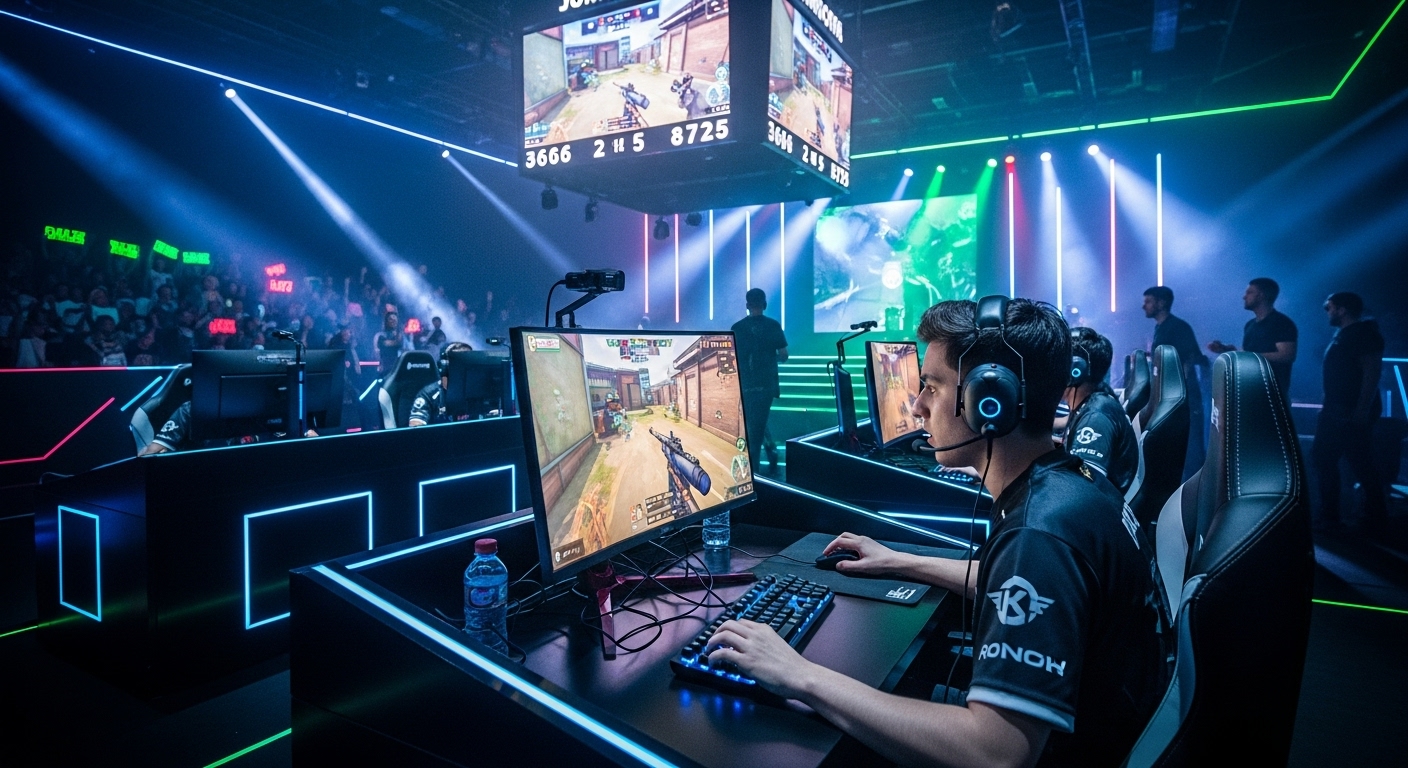
The esports calendar is filled with tournaments and leagues that span various genres. The League of Legends World Championship, The International, and CS:GO Majors are some of the most prestigious events, drawing millions of viewers worldwide. These events are often hosted in arenas that rival those of traditional sports, complete with live audiences, commentary desks, and elaborate stage designs.
Sponsorships and Revenue
Sponsorships are the financial backbone of esports. Major brands — from hardware manufacturers to energy drinks and even luxury fashion labels — invest heavily in teams and events. The revenue model extends to broadcasting rights, merchandise, ticket sales, and digital goods. In recent years, esports organizations have also ventured into content creation, lifestyle branding, and entertainment.
Broadcasting and Streaming
Broadcasting in esports is as sophisticated as any televised sport. Professional casters (commentators) provide play-by-play analysis, while analysts break down strategies and performance. Streaming platforms have revolutionized viewership, allowing global audiences to watch for free. Unlike traditional sports, esports thrives on accessibility — anyone with an internet connection can be part of the experience.
The Cultural Impact of Esports
Esports has transcended gaming to become a cultural force. It influences fashion, music, education, and even politics. The digital-native generation views esports not as an alternative to sports but as an evolution of competition itself.
Esports as a Lifestyle
For millions of young people, esports is not just entertainment — it is a lifestyle. It defines social circles, career aspirations, and creative expression. Esports jerseys, gaming peripherals, and team merchandise have become fashion statements. Many players aspire to become streamers, analysts, or content creators, reflecting the diverse opportunities within the ecosystem.
The Role of Social Media
Social media platforms have amplified the reach of esports. Highlights, memes, and discussions circulate within seconds, fueling constant engagement. Players and teams use these platforms to interact with fans, announce news, and build personal brands. This direct communication has blurred the line between celebrity and fan, creating a sense of intimacy and loyalty.
Education and Career Opportunities
Esports has made its way into academia and professional development. Universities around the world now offer scholarships for esports athletes, degrees in game design and esports management, and dedicated facilities for training. Career paths in esports extend beyond playing — they include coaching, event management, broadcasting, marketing, and technology development.
Esports vs. Traditional Sports
One of the most fascinating aspects of esports is its relationship with traditional sports. For years, critics dismissed esports as “not real sports,” arguing that it lacked physicality. However, this argument has become increasingly obsolete. Esports demands precision, reflexes, strategy, teamwork, and mental stamina — qualities that mirror those required in physical sports.
Traditional sports organizations have begun to embrace esports rather than reject it. Football clubs like Paris Saint-Germain, Manchester City, and FC Barcelona have launched esports divisions. The NBA established the NBA 2K League, blending virtual and physical competition. This cross-pollination demonstrates that esports and traditional sports are not adversaries but complementary realms of athletic expression.
Moreover, esports has advantages that traditional sports cannot replicate. It is not limited by geography, physical ability, or weather. It offers inclusivity, allowing players of any background to compete on a global stage. The digital format also enables instant updates, creative storytelling, and integration with technology such as augmented reality and virtual production.
The Technology Behind Esports
Esports would not exist without technology. High-performance computers, ultra-low latency networks, advanced graphics, and streaming platforms all form the backbone of this industry. Every advancement in technology pushes the boundaries of what esports can achieve.
Cloud computing has enabled scalable tournament infrastructure, while 5G and fiber optics ensure minimal lag and high-quality streaming. Artificial intelligence and data analytics are used to analyze player performance, predict outcomes, and enhance fan engagement. Virtual reality and augmented reality are also beginning to merge with esports, offering immersive experiences for both players and audiences.
Game developers play a crucial role in this ecosystem. Esports-friendly design requires balance, spectator tools, and regular updates to keep the competitive scene alive. Titles like Valorant, Rocket League, and Apex Legends demonstrate how developers now create games with esports in mind from the very beginning.
The Business and Economics of Esports
Esports has become one of the fastest-growing sectors of the global entertainment industry. The revenue from esports now rivals that of established sports leagues in certain regions. The business model is multifaceted, driven by sponsorships, media rights, merchandise, advertising, and ticket sales.
One key difference from traditional sports is the ownership model. In most esports titles, the game publisher retains control over the rules, branding, and competitive structure. This creates a unique dynamic where companies like Riot Games or Valve effectively act as both regulators and promoters of their respective games.
Franchising has also become a popular model. Leagues such as the Overwatch League and Call of Duty League introduced franchise slots that cost millions of dollars, offering stability and shared revenue systems similar to those of the NFL or NBA. This professionalized approach attracts long-term investment and builds sustainable ecosystems for teams and players.
Challenges Facing Esports
Despite its success, esports faces several challenges. One of the biggest issues is player burnout. The demanding schedule, high pressure, and short career lifespan can take a toll on mental health. Unlike traditional sports, there are fewer established systems for player welfare and retirement planning.
Another challenge is maintaining competitive integrity. Issues such as cheating, match-fixing, and doping have occasionally tarnished the industry’s reputation. As esports grows, governing bodies and regulatory frameworks are evolving to address these concerns.
Monetization and revenue distribution also remain areas of contention. While top-tier teams and players earn substantial incomes, smaller organizations often struggle to stay afloat. The ecosystem’s reliance on sponsorships and publisher control means that financial stability is not always guaranteed.
Finally, gender inclusivity is a topic that continues to evolve. While esports theoretically offers a level playing field, female representation at the highest levels remains low. Efforts are being made to foster inclusivity through dedicated leagues, mentorship programs, and advocacy initiatives, but there is still work to be done to ensure true equality in competition.
The Globalization of Esports
Esports is a global phenomenon that transcends language and culture. Asia remains the largest market, with China, South Korea, and Japan leading in infrastructure and audience size. North America and Europe continue to grow, driven by strong sponsorship and organizational structures. Meanwhile, regions like the Middle East, Latin America, and Africa are emerging as new hotspots, with increasing investments and grassroots development.
What makes esports uniquely global is its accessibility. Players can compete and collaborate across borders with nothing more than an internet connection. This has fostered an international community that values skill and passion over geography or nationality.
The Future of Esports
The future of esports is bright and limitless. As technology advances, so too will the potential for innovation. Virtual reality competitions may soon become mainstream, offering players and fans fully immersive experiences. Artificial intelligence could revolutionize coaching and training, providing real-time feedback and analytics.
Esports is also likely to play a major role in the metaverse — the emerging digital space where gaming, social interaction, and commerce intersect. Imagine attending a global tournament virtually, walking through a digital stadium, buying merchandise, and chatting with fans from around the world, all from your home.
Traditional education systems will continue to embrace esports, recognizing it as both a legitimate career path and a medium for teaching teamwork, communication, and strategic thinking. Governments and international organizations may eventually recognize esports athletes in the same way they do Olympic competitors, further cementing esports’ place in global culture.
Conclusion
From its modest beginnings in university basements and arcades to its current status as a global entertainment powerhouse, esports has redefined competition for the digital age. It embodies the spirit of innovation, inclusivity, and community that defines the 21st century. More than just playing games, esports represents creativity, discipline, and the human desire to connect through shared passion.
The story of esports is far from over. As technology evolves and society continues to embrace new forms of entertainment, esports will only grow stronger — bridging cultures, inspiring new generations, and proving that competition and excellence can thrive in any arena, whether physical or virtual.
In many ways, esports is the sport of the future — but it is also very much the sport of today. Its growth tells a story not just about games, but about humanity’s enduring pursuit of mastery, belonging, and progress in an ever-changing digital world.