Introduction
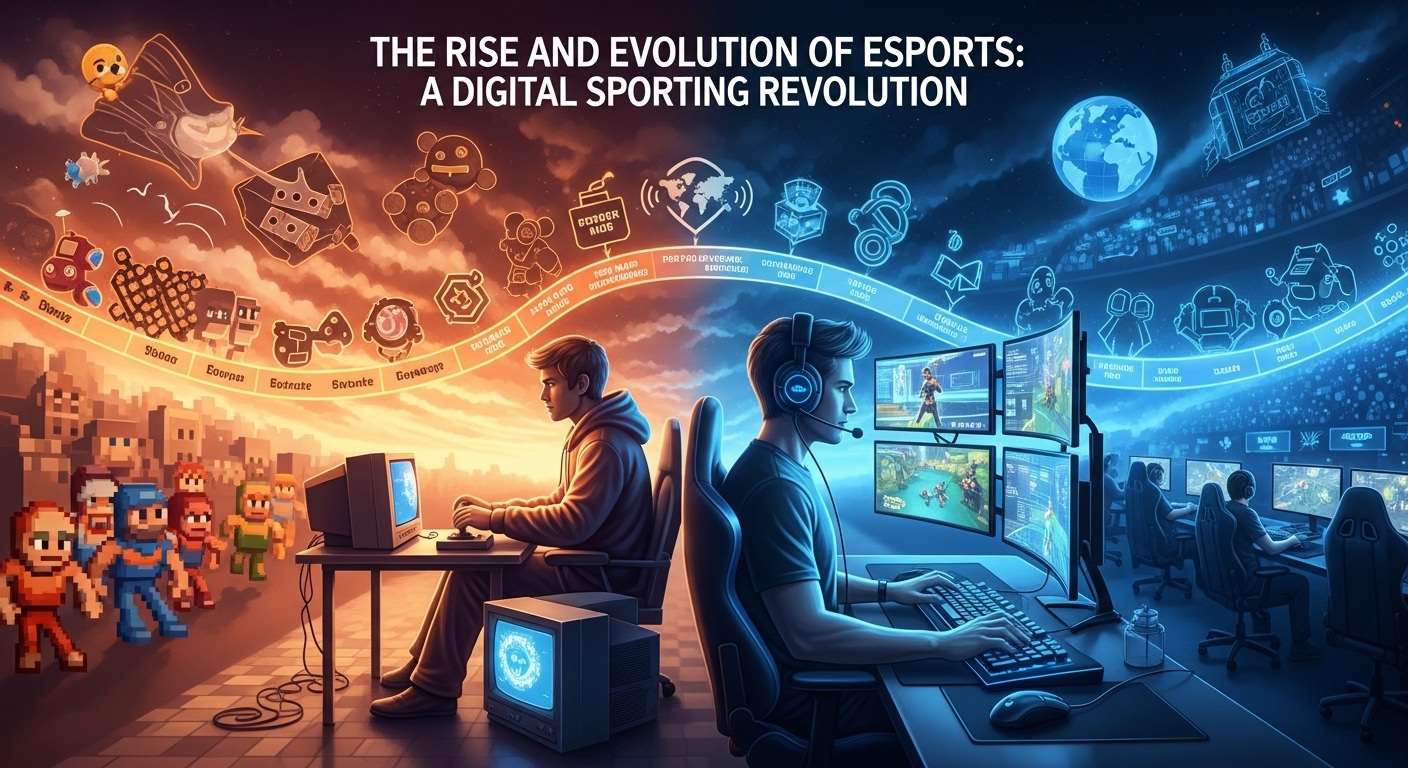
Esports, or electronic sports, has evolved from small local gaming contests into one of the fastest-growing global entertainment industries. What began as a pastime for gaming enthusiasts has transformed into a professional ecosystem that attracts millions of viewers, sponsors, and players worldwide. The journey of Esports represents not only the technological advancement of the digital age but also the cultural shift in how people perceive competition, entertainment, and community. Today, Esports rivals traditional sports in audience size and revenue, with tournaments filling massive arenas and professional gamers becoming international celebrities. This transformation did not happen overnight; it was shaped by decades of innovation, dedication, and the rising acceptance of gaming as a legitimate form of competitive entertainment.
The Early Beginnings of Esports
The origins of Esports can be traced back to the 1970s, long before high-speed internet or live streaming existed. In 1972, a group of Stanford University students participated in one of the first known competitive video game events, playing the game Spacewar. The winner received a year’s subscription to Rolling Stone magazine. Although small and informal, this event symbolized the beginning of competitive gaming. As video game technology developed through the 1980s, games like Pac-Man, Donkey Kong, and Space Invaders captivated players worldwide. Arcade competitions began to appear in local communities and television shows, with top scores becoming symbols of prestige. The 1990s saw the emergence of home consoles and early internet connectivity, enabling gamers to challenge each other without being in the same room. This shift laid the foundation for the modern Esports era.
The Rise of Online Gaming and Tournaments
As the internet became widely available in the late 1990s and early 2000s, online multiplayer games transformed how people played. Titles such as StarCraft, Counter-Strike, and Quake introduced competitive elements that attracted professional players and organized leagues. The first major Esports tournaments began during this era, with South Korea leading the charge. The country’s investment in broadband internet infrastructure created a fertile ground for online competition. The formation of the Korean e-Sports Association in 2000 marked a turning point in legitimizing gaming as a career path. Players became full-time professionals, sponsors joined in, and televised matches turned gaming into a national spectacle. Around the same time, Western countries began to follow suit. The Cyberathlete Professional League, Major League Gaming, and World Cyber Games became milestones in Esports history, each helping to globalize the competitive gaming movement.
The Explosion of Esports in the 2010s
The 2010s marked the decade when Esports truly went mainstream. Several factors contributed to this surge, including streaming platforms, social media, and the growing acceptance of gaming culture. Twitch, launched in 2011, revolutionized how audiences engaged with Esports. For the first time, fans could watch tournaments, commentate, and interact with players in real time. YouTube and other streaming services amplified this trend, creating a global community around gaming content. Games such as League of Legends, Dota 2, and Counter-Strike: Global Offensive became central pillars of the Esports landscape. Massive tournaments like The International and the League of Legends World Championship began offering prize pools worth millions of dollars. These events attracted not only gamers but also advertisers, investors, and mainstream media outlets. Esports players started receiving sponsorship deals from major brands, and teams developed into structured organizations resembling traditional sports clubs.
The Role of Technology in Esports Growth
Technology has been the driving force behind Esports’ expansion. High-performance gaming PCs, faster internet speeds, advanced graphics, and cloud gaming have made competitive gaming more immersive and accessible. The advent of virtual reality and augmented reality technologies is pushing the boundaries even further. Additionally, improvements in broadcasting and live streaming have elevated Esports production quality to rival that of major sporting events. Camera angles, instant replays, and professional commentary have made Esports broadcasts exciting for audiences unfamiliar with the games themselves. Artificial intelligence also plays a role in game balancing and analytics, providing data-driven insights to enhance player performance and viewer engagement. As technology continues to evolve, so will the possibilities for Esports entertainment.
Esports as a Career
One of the most striking changes in the Esports ecosystem is the recognition of gaming as a viable career. Professional players can earn substantial incomes through tournament winnings, brand sponsorships, streaming, and merchandise. Organizations employ coaches, analysts, and team managers who contribute to the professional development of players. Beyond competition, there are opportunities in casting, content creation, event management, and marketing. The rise of Esports universities and scholarships demonstrates how institutions are acknowledging the academic and professional potential of this industry. However, being an Esports athlete is not easy. Like traditional athletes, players undergo rigorous training schedules, focus on mental and physical health, and face pressure from competition and public scrutiny. Longevity in Esports is limited due to the intense reflexes required, but many players transition into coaching or content creation afterward.
The Economic Impact of Esports
Esports has become a multibillion-dollar industry, with revenues generated from sponsorships, advertising, ticket sales, and media rights. Global brands such as Coca-Cola, Intel, and Red Bull have entered the Esports space to reach younger audiences. Major tournaments fill stadiums, sell out tickets within minutes, and attract millions of viewers online. The 2020s have seen Esports integrated into the entertainment ecosystem, with streaming platforms and social media amplifying its reach. Franchised leagues, such as the Overwatch League and Call of Duty League, have adopted models similar to traditional sports leagues, including team ownership structures and city-based representation. This commercialization has created new jobs, from production crews to marketing teams, further fueling the global economy.
The Cultural Significance of Esports
Esports is not just about gaming; it represents a cultural movement that brings together people from diverse backgrounds. It promotes teamwork, strategic thinking, and problem-solving skills. For many young individuals, Esports provides a sense of belonging and identity. Online communities and fan bases form around favorite players and teams, creating a social experience beyond geographical boundaries. Esports has also influenced fashion, music, and media, merging digital culture with mainstream entertainment. Collaborations between gaming companies and luxury brands, as well as celebrity involvement in Esports ownership, reflect its growing cultural relevance. What was once viewed as a niche interest is now celebrated as an integral part of modern pop culture.
The Role of Education and Institutions
Educational institutions are increasingly integrating Esports into their programs. High schools and universities around the world now have Esports teams and dedicated gaming arenas. Scholarships are offered to talented players, similar to traditional athletic scholarships. These programs not only promote competitive gaming but also focus on career readiness, digital literacy, and STEM education. Esports clubs teach teamwork, leadership, and communication, helping students develop transferable skills applicable in other industries. The academic study of Esports has also grown, exploring topics such as game design, event management, psychology, and marketing. This educational integration strengthens the legitimacy of Esports as a long-term professional and cultural field.
Women in Esports
While Esports has traditionally been male-dominated, the landscape is slowly changing. Female gamers are gaining visibility and success across various titles. All-female tournaments and organizations have emerged to create more inclusive spaces. Figures such as Sasha “Scarlett” Hostyn and Katherine “Mystik” Gunn have paved the way for other women to enter the scene. Additionally, discussions about gender representation and inclusivity are leading to more awareness within the industry. Efforts are being made to eliminate harassment and bias, promoting a safer and more welcoming environment for all players. The rise of female content creators and casters is also expanding the Esports audience and inspiring a new generation of gamers.
Esports and Traditional Sports: A Comparison
Esports shares many similarities with traditional sports, including training discipline, teamwork, competition, and fan engagement. Just like athletes, professional gamers dedicate hours to practice and strategy. The infrastructure around Esports—coaches, analysts, and team branding—mirrors that of sports organizations. However, Esports differentiates itself through accessibility and global reach. While traditional sports are often limited by geography, Esports can connect players and fans from around the world in a single match. Additionally, Esports evolves more rapidly because of constant technological updates and game patches. Traditional sports may have centuries of history, but Esports is defining a new kind of digital athleticism suited for the 21st century.
Challenges Facing Esports
Despite its success, Esports faces several challenges. Issues such as player burnout, inconsistent regulation, and online toxicity continue to affect the industry. The lack of a unified global governing body makes it difficult to standardize rules, protect players’ rights, and manage cheating or doping. Financial instability is another concern for smaller teams that struggle to secure sponsorships. Furthermore, concerns over mental health and the short lifespan of gaming careers highlight the need for better player welfare programs. The industry must also address inclusivity, diversity, and sustainability to maintain long-term growth. As Esports continues to evolve, organizations and stakeholders are working toward building more stable and ethical frameworks.
The Future of Esports
The future of Esports looks incredibly promising. With advancements in virtual reality, augmented reality, and artificial intelligence, the line between gaming and traditional entertainment will continue to blur. The metaverse concept may introduce new forms of interactive competition, allowing players and fans to engage in fully immersive digital environments. The inclusion of Esports in multi-sport events such as the Asian Games demonstrates increasing recognition on a global scale. Discussions about Esports entering the Olympic Games reflect its growing legitimacy. As more investment pours into infrastructure, training facilities, and talent development, Esports is set to become a permanent fixture in global entertainment.
The Role of Fans and Community
At the heart of Esports lies its passionate community. Fans are the driving force that sustains the industry. They watch live matches, support their favorite teams, and create content that spreads enthusiasm across social platforms. Esports fandom is unique because it thrives online, allowing direct interaction between players and supporters. This engagement builds loyalty and transforms Esports from a spectator activity into a participatory experience. Community-driven platforms enable amateur players to compete and showcase their talents, contributing to the discovery of future stars. Without its vibrant fan base, Esports would not have achieved the cultural prominence it enjoys today.
Esports and Global Connectivity
Esports is one of the most globalized industries in modern entertainment. Players from different continents can face each other in real time, breaking down barriers of language and nationality. Tournaments are watched by international audiences, often featuring commentary in multiple languages. This level of connectivity fosters cross-cultural exchange and unity. Nations that once had little exposure to global sports now participate actively in Esports events. Developing countries are also recognizing Esports as a means of digital development and youth engagement. Governments are beginning to regulate and support Esports, seeing it as a viable contributor to economic growth and innovation.
Mental Health and Player Well-being
As the demands of professional gaming intensify, attention to mental health has become increasingly important. Players often face long hours of practice, performance pressure, and public criticism. The psychological strain can lead to anxiety, burnout, or depression if not managed properly. Organizations are now hiring psychologists and wellness coaches to support their teams. Discussions around work-life balance and digital wellness are gaining prominence. Maintaining a healthy relationship with gaming is essential not only for professionals but also for casual players. Esports can inspire positive habits if approached responsibly, emphasizing teamwork, focus, and perseverance.
Conclusion
Esports has journeyed from dimly lit arcades to international stadiums, from a hobby to a global industry shaping the future of entertainment. It embodies the power of technology, creativity, and human competition. As it continues to evolve, Esports will influence education, media, culture, and global communication. Its success story proves that gaming is more than just recreation—it is a form of expression, a career, and a community. The coming years will likely witness even greater innovation and inclusion, ensuring that Esports remains not only a digital revolution but also a defining symbol of the modern era.