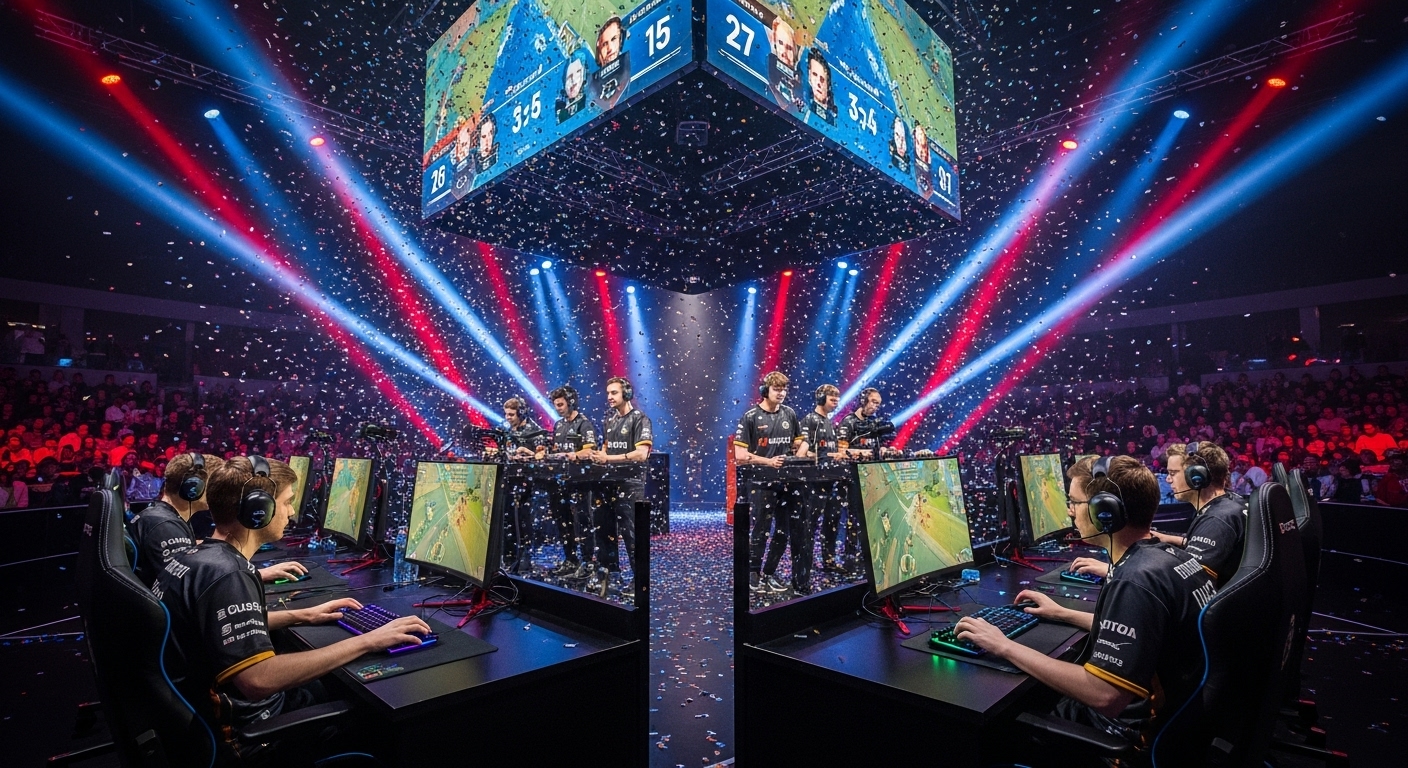
Esports, or electronic sports, has grown into one of the most dynamic and exciting sectors in the entertainment and sports industries. What once began as casual gaming competitions in small arenas has transformed into a global phenomenon, attracting millions of fans, players, and viewers worldwide. In this post, we will explore the evolution of esports, its rise in popularity, the development of esports leagues, and its future in an increasingly digital world. We’ll also dive into the impact esports has on culture, society, and the business world.
The Early Years: The Birth of Esports
Esports, as we know it today, can trace its roots back to the early days of computer gaming. In the late 20th century, video games were still in their infancy, and competitive gaming was far from mainstream. However, even in those early years, gamers began to compete against one another, mostly for fun and bragging rights.
One of the first recorded instances of competitive gaming was the 1972 Stanford University competition for the game Spacewar. Although the prize was modest (a year’s subscription to Rolling Stone magazine), it marked the beginning of competitive gaming as an organized event. However, it wasn’t until the mid-1990s that esports began to evolve into a more structured form.
The growth of the internet played a pivotal role in the rise of competitive gaming. With the advent of the internet, multiplayer games like Quake, StarCraft, and Warcraft allowed players to compete against others around the globe. Tournaments started to emerge in the late 1990s, although they were typically small and localized.
The 2000s: The Formation of Esports Leagues and Global Competitions
As internet speeds improved and gaming became more widespread, competitive gaming began to take shape in the 2000s. The early 2000s saw the rise of organized esports competitions, many of which were sponsored by gaming companies and internet cafes. These competitions were often regional, attracting a dedicated, though niche, fanbase.
One of the most significant events during this period was the rise of StarCraft in South Korea. The 1998 release of StarCraft led to a boom in competitive gaming in the country. By 2002, South Korea had developed its first professional gaming league, the Korean e-Sports Association (KeSPA). This league was instrumental in popularizing esports in South Korea and later internationally. StarCraft became one of the first games to be regarded as an esports staple, with professional players and teams forming, and games broadcasted on TV channels such as MBCGame. This period also saw the formation of large-scale competitions like World Cyber Games (WCG), ESL (Electronic Sports League), and DreamHack, which would later become some of the most recognizable brands in esports.
The early 2000s also saw the rise of internet cafes that provided the infrastructure needed for gaming competitions. These cafes were often the heart of esports tournaments, where players could compete in multiplayer games, watch professional players, and enjoy the social aspect of gaming.
The 2010s: Mainstream Popularity and Professionalization
As the 2010s dawned, esports began to shed its niche status and became a mainstream cultural phenomenon. Several factors contributed to this surge in popularity:
- Streaming Platforms: Platforms like Twitch, YouTube, and Mixer played an enormous role in increasing esports’ visibility. Twitch, launched in 2011, allowed gamers to stream their gameplay and interact with viewers. This enabled fans to follow professional players and tournaments in real-time, fostering a sense of community and connection between fans and players. Streaming not only provided a platform for professional players to gain visibility but also allowed casual gamers to create their own following, turning some into celebrities.
- Big Business and Sponsorships: By the 2010s, major brands outside of the gaming industry began to take notice of esports’ growing popularity. Companies like Intel, Red Bull, Coca-Cola, and Mercedes-Benz became prominent sponsors of major esports tournaments. These sponsorships elevated esports from an underground activity to a legitimate business, with huge financial investments in prize pools, team sponsorships, and live event broadcasting. The growth of prize money for competitions also helped esports players turn professional, with some tournaments offering prize pools exceeding $10 million, such as The International for Dota 2.
- Esports Leagues and Infrastructure: Esports began to resemble traditional sports leagues, with the formation of long-term, structured professional leagues. The League of Legends Championship Series (LCS) and Overwatch League (OWL) are two prime examples of esports leagues that began to mirror the structure of traditional sports leagues. Teams signed professional players to long-term contracts, and games became more about strategy and teamwork than individual skill. With these professional leagues came regular seasons, playoffs, and championship events, all of which were broadcast to millions of viewers.
- Increased Viewership and Popularity: As the popularity of esports soared, viewership also followed suit. Major tournaments were broadcast live and attracted millions of viewers. The 2019 League of Legends World Championship, for instance, garnered over 100 million viewers globally, surpassing the viewership of traditional sports finals like the NBA Finals.
The popularity of esports wasn’t limited to just games like League of Legends and Dota 2. The 2010s saw the rise of battle royale games such as Fortnite and PUBG, which not only attracted a new generation of gamers but also spurred competitive tournaments. Fortnite’s competitive scene, for example, reached new heights when the Fortnite World Cup offered a staggering $30 million in prizes, with a solo winner receiving $3 million. This further cemented esports’ position as a viable career path for gamers.
Esports as a Cultural Force
By the end of the 2010s, esports had become much more than just a competitive gaming scene. It had grown into a cultural force, influencing fashion, music, and entertainment.
Esports and Pop Culture
Esports made its way into mainstream pop culture, influencing fashion trends, music, and television. Prominent esports athletes, such as Faker (Lee Sang-hyeok) from League of Legends and s1mple (Oleksandr Kostyliev) from Counter-Strike: Global Offensive, became international icons. They were often featured in magazines, television interviews, and even endorsement deals with non-endemic brands like Nike, Coca-Cola, and Samsung.
Esports players became global celebrities, with massive social media followings, often more significant than traditional sports stars. For example, Ninja, one of the most famous Fortnite players, became a mainstream figure, appearing on talk shows and collaborating with celebrities like Drake.
Esports and Education
The growth of esports also saw its inclusion in the educational sector. Many high schools and universities around the world began offering scholarships for esports players, and some institutions even created dedicated esports programs. Schools started establishing esports teams to compete in intercollegiate competitions, which further legitimized esports as a respected and established activity. The NCAA in the United States began to explore how to incorporate esports into their competitive structure, signaling that esports may one day be recognized as a varsity sport in colleges across the country.
The 2020s and the Future of Esports
As we move into the 2020s, esports continues to evolve at a rapid pace. The ongoing COVID-19 pandemic accelerated the shift toward online tournaments and digital events, which allowed esports to remain a staple form of entertainment during lockdowns and social distancing measures. The future of esports looks incredibly bright, with several key trends emerging:
- Integration with Traditional Sports: Major sports organizations like the NFL, NBA, and FIFA have already begun experimenting with esports. The NBA 2K League and FIFA eWorld Cup are examples of how traditional sports and esports are beginning to merge. Expect to see more integration between traditional and esports, with cross-promotions, joint events, and even crossover players.
- Virtual Reality and Augmented Reality: The introduction of virtual reality (VR) and augmented reality (AR) technologies is expected to revolutionize the way we experience esports. VR and AR can take gaming competitions to the next level, allowing players and viewers to experience the action in more immersive and interactive ways.
- Increased Global Reach and Cultural Impact: As internet access continues to grow around the world, esports will likely become more global, with regions such as Southeast Asia, Latin America, and Africa becoming increasingly involved in the esports ecosystem. Esports could soon become a truly global activity, with players and fans from all corners of the world engaging in competitions.
- The Rise of New Games: While games like League of Legends, Dota 2, and Fortnite dominate the competitive scene, new games are continually being developed to meet the demands of players and fans. Titles like Valorant, Apex Legends, and Rocket League have already established themselves as major esports titles, and more are sure to follow.
- Monetization and Business Growth: The business of esports will continue to grow as more companies invest in esports teams, tournaments, and media rights. Streaming platforms like Twitch and YouTube will continue to generate significant revenue from ads, subscriptions, and sponsorships. Esports teams and players will continue to benefit from the booming esports economy, with opportunities for sponsorships, brand partnerships, and streaming deals.
Conclusion: The Future of Esports is Limitless
Esports has come a long way since its humble beginnings, and there is no end in sight to its growth. The rise of digital platforms, new technologies, and increased media attention has helped esports become a global powerhouse. As we look to the future, we can expect even greater advancements in the way esports are played, viewed, and monetized.
The future of esports is bright, and it’s clear that this industry is here to stay. With its expanding fanbase, professional infrastructure, and cultural impact, esports will continue to reshape the way we think about competitive entertainment and digital culture. Whether you’re a player, a fan, or a casual observer, one thing is certain: esports has a significant role to play in shaping the future of sports and entertainment.