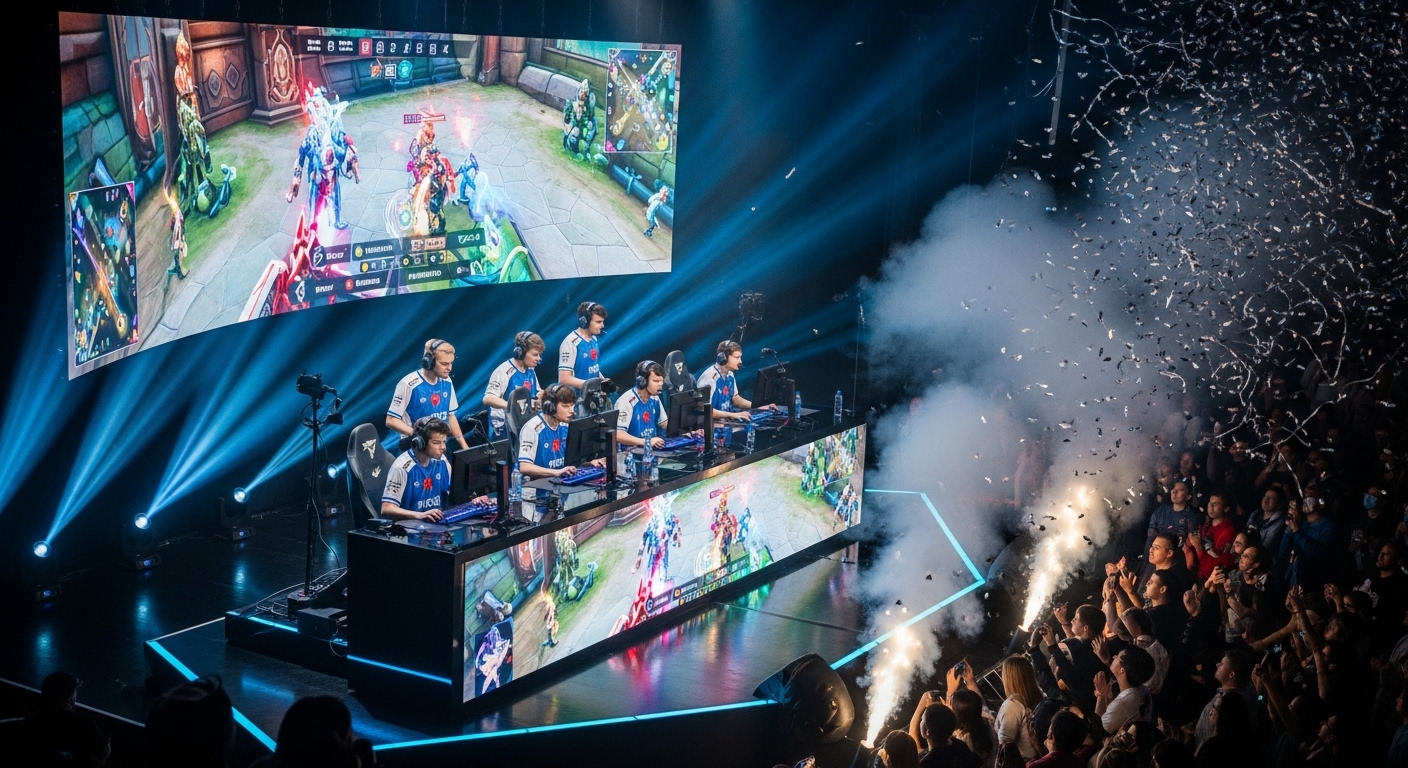
Over the last two decades, the world of eSports has undergone a remarkable transformation, evolving from a niche hobby into a global entertainment powerhouse. What began as small LAN parties and local tournaments has blossomed into a billion-dollar industry with professional leagues, sponsorships from global brands, and massive global audiences. Today, eSports is no longer a subculture of gaming but a mainstream form of entertainment that rivals traditional sports in popularity and influence.
This post will explore the journey of eSports from its humble beginnings to its current status as a global phenomenon. We will delve into the key moments that have shaped the industry, the elements that make eSports unique, and the cultural, social, and economic impact it has had on gaming, sports, and entertainment.
The Origins of eSports: From Casual Play to Competitive Gaming
The concept of competitive gaming has existed for decades, though it wasn’t always considered a legitimate sport. The first significant foray into competitive gaming occurred in the early 1990s, when multiplayer video games like Doom and Quake allowed players to compete in small, local tournaments. These early LAN (Local Area Network) parties were often informal, with groups of friends gathering to play against each other in casual competitions. While these events were fun and exciting, they remained small in scope and limited to specific communities.
One of the earliest milestones in eSports history was the Red Annihilation tournament held in 1997. This event, which was centered around the first-person shooter Quake, is considered one of the first major organized eSports competitions. The tournament’s grand prize was a Ferrari, and it attracted attention from both the gaming community and mainstream media. While still a small event by today’s standards, Red Annihilation marked the beginning of competitive gaming as a serious pursuit, setting the stage for the explosive growth of eSports in the following decades.
The Rise of Professional eSports: Key Moments in the 2000s
As the internet became more accessible, competitive gaming began to grow on a global scale. The advent of online gaming in the late 1990s and early 2000s allowed players to compete with others around the world without having to be in the same physical location. Multiplayer games like StarCraft, Warcraft III, and Counter-Strike became central to the competitive gaming scene, with dedicated players honing their skills and participating in tournaments that began to garner significant attention.
In South Korea, StarCraft became a cultural phenomenon in the early 2000s, with the country developing one of the first professional eSports scenes. The Korean e-Sports Association (KeSPA) was formed to help regulate and promote competitive gaming, and tournaments such as the ProLeague became televised events, attracting huge audiences both in South Korea and internationally. The success of StarCraft helped demonstrate that eSports could be more than just a hobby; it could be a professional career, with sponsorships, prize money, and widespread fan support.
Meanwhile, in the West, the popularity of games like Counter-Strike and Warcraft III led to the creation of large online tournaments and leagues. The launch of events like the World Cyber Games (WCG) and the Electronic Sports World Cup (ESWC) brought international attention to competitive gaming and established a platform for the best players to compete on a global stage. These tournaments helped lay the groundwork for the future success of eSports by demonstrating the potential for competitive gaming to reach a worldwide audience.
The Explosion of eSports: A Mainstream Entertainment Industry
By the early 2010s, eSports had grown exponentially, and it was clear that the industry was on the verge of something truly special. The rise of online streaming platforms like Twitch, which was launched in 2011, played a key role in this expansion. Twitch allowed gamers and eSports fans to watch live-streamed tournaments and matches, enabling viewers from around the world to tune in to their favorite events in real time. This new form of content delivery allowed eSports to break out of the realm of niche fandom and into the mainstream.
One of the most notable turning points for eSports was the creation of The International (TI), the premier annual tournament for Dota 2, a game developed by Valve. The first TI took place in 2011 and had a modest prize pool of $1 million, but by 2018, the prize pool had surpassed $25 million. The International became a symbol of the growing financial potential of eSports, demonstrating that competitive gaming could offer large financial rewards for players and teams. The tournament’s success also helped propel Dota 2 to global prominence, cementing its place as one of the most popular competitive games.
Around the same time, League of Legends (LoL) became another defining title in the eSports landscape. Riot Games, the developer behind LoL, created a professional league system with the launch of the League of Legends Championship Series (LCS) in North America and the League of Legends Pro League (LPL) in China. These leagues helped to further establish the structure of professional eSports, with regular seasons, playoffs, and championships. LoL’s annual World Championship quickly became one of the most-watched eSports events globally, attracting millions of viewers from all over the world.
The growth of these major eSports titles and tournaments led to an influx of corporate sponsorships, with brands like Coca-Cola, Intel, and Red Bull becoming major supporters of the industry. In addition, traditional sports organizations began to take notice of the potential of eSports, with teams and athletes from sports like basketball, football, and soccer investing in eSports teams and leagues. These partnerships helped to further legitimize eSports as a form of entertainment on par with traditional sports.
The Structure of eSports: Teams, Players, and Leagues
As eSports transitioned from casual play to a professional industry, the structure of competitive gaming became more formalized. Professional eSports teams began to form, with players competing in various games as part of organized squads. These teams became central to the success of eSports, offering players not just a platform to compete, but also a support system that included coaches, analysts, managers, and even psychologists to help players perform at their best.
The top eSports organizations, such as Team Liquid, Cloud9, Fnatic, and T1, quickly became household names within the gaming community. These organizations sign players to long-term contracts, often offering salaries, health insurance, and sponsorship deals. Just like in traditional sports, eSports teams engage in training regimens, practice sessions, and strategic planning to compete at the highest level.
Along with the rise of professional teams, eSports leagues have become a major part of the industry. Titles like League of Legends, Overwatch, Counter-Strike: Global Offensive, and Call of Duty now feature well-established leagues with regular seasons, playoffs, and finals. These leagues operate similarly to traditional sports leagues, with teams competing throughout the year for rankings, sponsorships, and prize money.
The organization and structure of professional eSports have helped bring stability to the industry. Players now have clear career paths, teams have established roles and responsibilities, and fans can follow their favorite teams and players over long periods of time.
The Impact of eSports: Cultural, Social, and Economic Shifts
eSports has had a profound impact on society, both culturally and economically. Culturally, eSports has redefined the concept of sport. While traditional sports focus on physical skill and athleticism, eSports emphasizes mental acuity, strategy, teamwork, and reflexes. Many see eSports as a legitimate form of competition that requires just as much dedication and practice as traditional sports.
Socially, eSports has created a unique global community of players and fans who interact with each other online and at live events. The advent of streaming platforms like Twitch has allowed fans to watch live competitions, chat with players and commentators, and participate in the broader eSports culture. This sense of community has led to the development of fan clubs, dedicated forums, and even live meetups, all of which contribute to the global appeal of eSports.
Economically, eSports has become a major industry in its own right. In addition to prize money, players and teams earn revenue through sponsorships, merchandise sales, streaming, and advertising. Tournaments and leagues generate millions of dollars in revenue from ticket sales, broadcasting rights, and corporate partnerships. This economic impact extends beyond the players and teams, as eSports has also created job opportunities in event management, broadcasting, game development, marketing, and content creation.
The Future of eSports: New Frontiers and Challenges
While eSports has already achieved remarkable success, the industry is still in its early stages, and there are many exciting developments on the horizon. One of the key areas of growth for eSports is the integration of new technologies. Virtual reality (VR) and augmented reality (AR) have the potential to revolutionize how fans experience eSports, offering more immersive viewing experiences. The growth of cloud gaming, in which games are streamed from remote servers rather than played on local devices, could also help expand access to competitive gaming by eliminating the need for expensive hardware.
However, eSports also faces challenges as it continues to grow. Issues such as player burnout, mental health concerns, and match-fixing scandals have raised questions about the sustainability of the industry. In addition, the regulation of eSports remains a gray area, with no universal governing body overseeing the competitive scene. As eSports continues to evolve, it will be important for the industry to address these challenges and ensure that the health and well-being of players remain a priority.