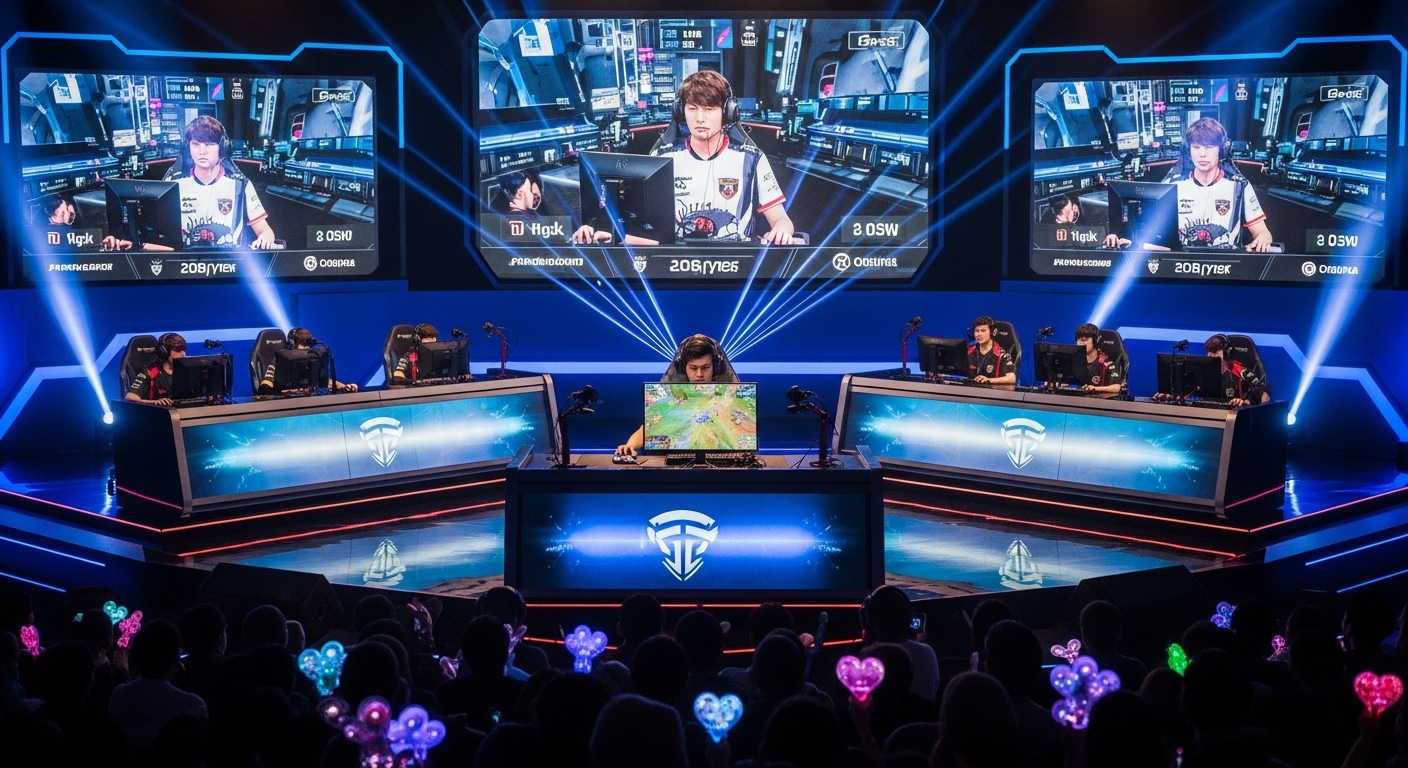
Esports, or electronic sports, has evolved from a niche hobby to a global phenomenon that captivates millions of players and viewers worldwide. What was once considered just “playing video games” has transformed into a legitimate competitive arena, complete with professional teams, sponsorships, and multi-million-dollar prize pools. The meteoric rise of esports is more than just entertainment; it reflects technological innovation, cultural shifts, and the expanding potential of digital media.
The Origins of Competitive Gaming
The roots of esports trace back to the 1970s and 1980s, when arcade games and home consoles first entered mainstream culture. Early competitions, such as the Space Invaders Championship held in 1980, attracted thousands of participants and helped sow the seeds of competitive gaming. These tournaments were modest compared to today’s grand events, yet they established a fundamental truth: gaming could be competitive, engaging, and community-driven.
During the 1990s, competitive gaming began gaining structure with the rise of multiplayer PC games. Titles like Quake, Counter-Strike, and StarCraft created new forms of online competition. Early leagues and online communities facilitated rivalries that transcended local gaming scenes, paving the way for a truly global phenomenon. It was during this era that players began to recognize gaming as more than a pastime, but as a potential career path for the most skilled individuals.
The Evolution of Esports as a Professional Industry
In the early 2000s, esports began transitioning from casual competitions to organized professional leagues. South Korea played a pivotal role in this transformation, particularly with the professionalization of StarCraft: Brood War. Television networks began broadcasting matches, players signed professional contracts, and esports venues emerged to host competitive events. South Korea’s model became a blueprint for global esports growth, emphasizing training, sponsorship, and fan engagement.
By the late 2000s and early 2010s, esports began expanding to other regions, including North America, Europe, and China. Game developers recognized the potential of competitive gaming to increase engagement and revenue. Titles such as League of Legends, Dota 2, and Call of Duty introduced structured tournaments with massive prize pools, capturing the attention of mainstream audiences and media.
The Role of Technology in Esports Growth
Technology has been a driving force behind the meteoric rise of esports. High-speed internet, powerful gaming hardware, and sophisticated streaming platforms have enabled seamless competition and real-time engagement. Streaming services like Twitch, YouTube Gaming, and more recently, TikTok Gaming, have allowed players and fans to connect in unprecedented ways. Esports content is now accessible globally, with millions tuning in to watch live matches, commentary, and behind-the-scenes content.
Moreover, technological innovation has enabled a new level of spectator experience. High-definition broadcasts, in-game statistics, augmented reality overlays, and professional commentary enhance the excitement of esports events. Viewers can follow strategic decisions, player reactions, and match dynamics, making esports a fully immersive experience. Unlike traditional sports, the digital nature of esports allows for real-time analytics, interactive polls, and direct fan engagement, creating a unique blend of entertainment and strategy.
Popular Esports Titles and Their Impact
Esports is defined by its games, each with unique gameplay, communities, and competitive structures. Some of the most influential titles include:
League of Legends
One of the most iconic esports titles, League of Legends has created a global competitive scene with professional leagues in every major region. Its intricate gameplay, team dynamics, and strategic depth make it a favorite for both players and spectators. Annual events like the World Championship draw millions of viewers worldwide, establishing esports as a serious professional pursuit.
Dota 2
Dota 2 is renowned for its complexity and the sheer scale of its competitive ecosystem. Its flagship tournament, The International, features prize pools exceeding tens of millions of dollars, funded in part by fan contributions. Dota 2 emphasizes teamwork, strategy, and individual skill, cementing its place as a cornerstone of esports history.
Counter-Strike: Global Offensive
Counter-Strike: Global Offensive, or CS:GO, is a first-person shooter that has maintained competitive relevance for over a decade. Its professional scene is highly structured, featuring leagues, majors, and international tournaments. CS:GO’s combination of fast-paced action, tactical depth, and community involvement has sustained its popularity across multiple generations of players.
Valorant and Call of Duty
Recent titles like Valorant and Call of Duty represent the next generation of esports, blending shooter mechanics with team strategy. These games leverage both console and PC platforms, expanding the competitive ecosystem and introducing esports to a broader audience.
Fighting and Racing Games
Esports is not limited to MOBAs and shooters. Fighting games like Street Fighter and Tekken, as well as racing games like iRacing and F1 Esports, have cultivated dedicated communities. These genres highlight the diversity of esports, proving that nearly any competitive game can thrive in the esports ecosystem.
The Cultural Impact of Esports
Esports has not only changed gaming but has also influenced popular culture. Professional players are now celebrities, often with millions of followers on social media platforms. Teams are branded like traditional sports franchises, with merchandise, sponsorships, and fan clubs. Streaming personalities, commentators, and analysts contribute to a rich esports ecosystem that goes beyond just playing games.
Esports has also impacted youth culture, education, and career opportunities. Universities now offer esports scholarships, degrees, and campus teams. Young players can envision careers as professional gamers, content creators, or esports managers, illustrating the legitimacy of the industry. Beyond career pathways, esports has promoted digital literacy, strategic thinking, teamwork, and problem-solving skills.
Economic and Business Dimensions
The esports industry is a multi-billion-dollar market, encompassing sponsorships, advertising, media rights, merchandise, ticket sales, and digital content. Brands like Nike, Red Bull, and Intel have invested heavily in esports sponsorships, recognizing the value of engaging a young, tech-savvy audience. Streaming platforms generate significant revenue through subscriptions, advertisements, and premium content.
Investors and entrepreneurs view esports as a growth market with global reach. The professionalization of teams, establishment of leagues, and expansion of live events contribute to an ecosystem that rivals traditional sports in scale and profitability. Unlike traditional sports, esports offers flexibility in content delivery, digital monetization, and global engagement, making it uniquely suited for the modern entertainment landscape.
Challenges and Controversies in Esports
Despite its growth, esports faces significant challenges. Player burnout, mental health issues, and inconsistent income streams are common concerns. The intense training schedules, constant travel, and high expectations can lead to stress and career instability. Organizations are beginning to address these issues through structured support, mental health resources, and sustainable player contracts.
Cheating, match-fixing, and toxic behavior also threaten the integrity of esports. Anti-cheat technologies, strict regulations, and community moderation are essential to maintaining fairness and professionalism. Moreover, the industry must navigate legal, cultural, and regulatory hurdles across different regions to ensure long-term sustainability.
The Future of Esports
The future of esports is poised for further expansion and innovation. Virtual reality (VR) and augmented reality (AR) technologies could redefine competitive gaming, creating fully immersive environments for both players and spectators. Artificial intelligence may assist with training, strategy analysis, and matchmaking, enhancing player performance and audience engagement.
Esports is also likely to integrate more closely with traditional sports, entertainment, and media industries. Collaborative events, crossover sponsorships, and multi-platform experiences may become standard, blurring the lines between gaming, sports, and mainstream entertainment. Furthermore, the growing emphasis on inclusivity and accessibility could expand esports participation, ensuring that competitive gaming is available to diverse communities worldwide.
Conclusion
Esports has grown from humble beginnings into a global phenomenon, transforming entertainment, culture, and professional opportunities. Its success is rooted in technological innovation, passionate communities, and the dedication of players and organizations worldwide. As the industry continues to evolve, esports promises to reshape how we perceive competition, entertainment, and human creativity. What began as simple gameplay has become a multi-billion-dollar industry, proving that the world of esports is not just a pastime—it is the future of competitive sports.